Solar powered products for homes and small businesses in 2026

a[data-rs-seo-link]{text-decoration:underline!important;color:#1a56db!important;cursor:pointer!important;}a[data-rs-seo-link]{text-decoration:underline!important;color:#1a56db!important;cursor:pointer!important;}
What solar powered products can realistically do in 2026
Solar powered products now cover much more than garden lights and small chargers. In 2026, the category includes rooftop photovoltaic systems, battery-backed home energy setups, solar water heating, outdoor lighting, pumps, cameras, gate openers, ventilation fans, portable panels and power stations for backup or mobile use. The right choice depends less on the word solar and more on the task: how much energy the product needs, when it must operate, how much sunlight the site receives and whether storage is required.
For readers comparing options in the broader Solar Products category, the practical takeaway is straightforward. Small solar devices can work well when the load is modest and predictable. Larger systems need site evaluation, permitting, utility review and realistic financial assumptions. The expiration of the federal residential clean energy credit for new post-2025 residential installations also makes local incentives and electricity rates more important in the buying decision.

Why the market for solar products keeps expanding
The U.S. Department of Energy describes two main solar energy technology families: photovoltaic systems, which convert sunlight into electricity, and concentrating solar-thermal technologies, which use sunlight as heat. Most consumer and small-business solar powered products use photovoltaic panels. Solar thermal products are more common in water heating and selected industrial applications.
Market data helps explain why more products now combine solar modules, batteries and power electronics. SEIA and Wood Mackenzie reported that the U.S. solar industry installed 11.4 gigawatts direct current of capacity in the second quarter of 2026, a 45% increase from the same quarter in 2025. SEIA also reported in 2026 that U.S. solar capacity could power more than 50 million American homes. Those figures describe the wider solar market; they do not mean every individual product will be cost-effective. They do show why solar components are appearing in more everyday devices and small commercial applications.
The distributed solar market has also become more selective. SEIA noted that some distributed segments softened as the market adjusted to the end of the federal Section 25D residential credit after December 31, 2025. For homeowners and small businesses, the purchase decision should therefore start with the actual use case, local utility policy, backup value and product durability, rather than assuming every solar purchase will have the same payback profile.
Main types of solar powered products
| Product type | Common use | What to check before buying |
|---|---|---|
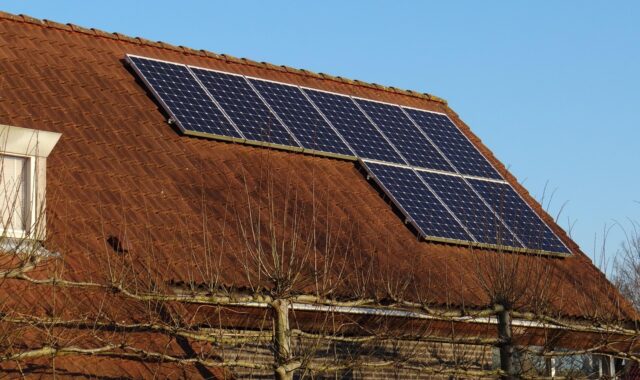
| Rooftop or ground-mounted solar PV | Offsetting household or business electricity use | Roof condition, shade, permits, interconnection, installer credentials and utility rate structure |
| Solar plus battery storage | Backup power, time-of-use shifting and resilience | Battery capacity in kilowatt-hours, inverter rating, critical-load panel needs, warranty and fire-safety listing |
| Solar water heating | Domestic hot water or selected commercial hot-water loads | Collector certification, freeze protection, roof orientation, backup heating and maintenance access |
| Solar outdoor lighting | Pathways, parking areas, signs, yards, farms and security lighting | Lumen output, battery size, lighting hours, motion controls, weather rating and winter performance |
| Solar pumps | Irrigation, livestock water, ponds, fountains and remote fluid movement | Flow rate, lift height, water storage, panel size and whether the pump must run after sunset |
| Solar cameras, sensors and gate openers | Remote monitoring and access control | Standby load, wireless signal, battery reserve, theft resistance and cloudy-day autonomy |
| Portable solar panels and power stations | Camping, RVs, field work, short outages and device charging | Battery watt-hours, panel wattage, surge rating, recharge time, connector compatibility and weight |
| Solar ventilation fans | Attics, sheds, greenhouses, boats and RVs | Airflow rating, thermostat controls, weather sealing and whether the fan needs battery-backed operation |
The common mistake is treating all of these products as if they solve the same problem. A solar path light may need only a few watt-hours per night. A refrigerator, pump, air conditioner or EV charger can require far more energy and a much more carefully designed system. Product sizing matters more than marketing language.
How to evaluate a solar powered product before purchase
Start with the load, not the panel
A practical solar purchase starts with energy demand. Estimate watt-hours by multiplying watts by hours of use. A 10-watt light used for eight hours needs about 80 watt-hours before battery and controller losses. Devices with motors, compressors or heating elements may also have startup surges or continuous loads that make them unsuitable for a small panel, even if a product page suggests solar compatibility.
For portable systems, compare battery capacity in watt-hours with the daily load. For installed systems, compare expected solar production with the building’s load profile and utility rate plan. If a product needs to keep working through cloudy weather, size the battery for reserve days rather than a single ideal sunny day.
Evaluate sunlight and shading
The Department of Energy’s homeowner guidance notes that heavy tree shade can make rooftop solar less suitable. The same principle applies to small solar products. A camera mounted under an eave, a light placed under dense landscaping or a pump panel shaded during peak sun hours may underperform even if the panel is technically large enough.
In much of the United States, south-facing solar exposure often supports stronger annual production, while east- and west-facing surfaces may still be useful depending on the load and time of use. For portable panels, adjustable tilt can also matter because a panel lying flat on the ground may collect less energy than the rated output suggests.
Look for real storage and power ratings
Many solar powered products include a small battery, but that battery may be sized only for light use. For higher-value purchases, check both energy capacity and power output. Energy capacity indicates how long the system can run a load. Power output indicates whether it can start and operate that load at all.
NREL’s 2025 cost benchmark work modeled a 13.5-kilowatt-hour lithium-ion battery cabinet for PV-plus-storage analysis, which illustrates the scale difference between a whole-home battery and a small device battery. A compact solar security light and a home battery system are both solar-related, but they are not comparable products.
Check safety, durability and serviceability
For electrical products, look for recognized safety testing marks such as UL or ETL, appropriate outdoor ratings, clear installation instructions and accessible replacement parts. Outdoor products should specify water and dust resistance rather than relying on vague weatherproof claims. Battery products should list battery chemistry, operating temperature range, warranty terms and charging limits.
For installed systems, permits, electrical code compliance and utility interconnection are not optional details. A low price can become expensive if the system cannot pass inspection, connect to the grid or receive warranty service.
Update the incentive math for 2026
The policy environment changed materially after 2025. The Internal Revenue Service states that the Residential Clean Energy Credit equaled 30% for qualifying property installed from 2022 through December 31, 2025, and that the credit is not available for property placed in service after December 31, 2025. IRS guidance also explains that paying a deposit before the deadline does not preserve the credit if installation is completed afterward. See also: Buying Guides.
That does not make every 2026 solar purchase unattractive. It does mean buyers should check state incentives, utility rebates, net metering rules, time-of-use rates and local permitting timelines before estimating payback. Commercial projects may face different tax rules from residential purchases, so businesses should confirm eligibility with a qualified tax professional rather than relying on consumer solar marketing.
Where solar powered products fit best
Homes
For homes, solar products work best when they match a clear need. Outdoor lights, cameras, gate openers and small fans can avoid trenching electrical lines across a yard. Rooftop PV can reduce grid electricity purchases when the home has good sun exposure and a favorable utility structure. Batteries can add resilience for selected circuits, but they should be sized around essential loads such as refrigeration, communications, lighting or medical devices, not around the assumption that an entire home can run normally during a long outage.
Small businesses
Small businesses may use solar powered lighting, signs, cameras, sensors, irrigation controls or roof-mounted PV. The strongest cases usually involve either high daytime electricity use or remote equipment where grid wiring would be costly. A warehouse with daytime loads, a farm pump far from existing service or a sign in a sunny parking area can be a better fit than a shaded storefront with limited roof space.
Outdoor, agricultural and remote locations
Remote loads are often among the best fits for standalone solar. Solar pumps can move water when sunlight is available and store water in a tank instead of storing electricity in a battery. Solar cameras and sensors can support monitoring on farms, construction sites or trail systems. In these settings, the value comes not only from energy savings but also from avoiding fuel delivery, generator noise or long wiring runs.
Backup and emergency use
Portable panels and power stations can support phones, radios, lights, laptops, small medical devices and compact refrigeration during short disruptions. They should not be confused with automatic whole-home backup unless the system is designed, wired and permitted for that purpose. For emergency planning, prioritize the loads that keep people safe and connected, then size solar input and battery capacity around those loads.
Common limits buyers should not ignore
- Solar output changes with weather and season. A product that performs well in summer may struggle through short winter days or consecutive storms.
- Small batteries wear out. Many inexpensive solar lights fail because the battery degrades before the panel or fixture does.
- Heating and cooling loads are demanding. Space heaters, water heaters, air conditioners and EV chargers usually require much larger systems than small solar kits can support.
- Marketing can be ambiguous. Some products are solar-ready or solar-assisted rather than fully solar powered under normal use.
- Permitting and utility rules matter. Grid-tied systems, batteries and EV charging setups may require inspection, interconnection approval and code-compliant installation.
- Payback is local. Electricity prices, net metering, rate design, state incentives and financing terms can change the economics dramatically.
A cautious reading is better than an optimistic one. If the product description does not clearly state panel wattage, battery capacity, operating hours, warranty coverage and installation requirements, the buyer does not yet have enough information for a confident decision.
A practical buying checklist
- Define the exact load the product must power, including watts, operating hours and startup surge if applicable.
- Confirm that the solar panel can recharge the battery during realistic local sunlight conditions, not only under laboratory conditions.
- Check whether the product must operate at night, in winter or during cloudy periods, then size storage accordingly.
- Look for safety listings, outdoor ratings, warranty terms and replacement-battery availability.
- For rooftop PV, batteries or hardwired equipment, verify permitting, interconnection and installer licensing before signing.
- For 2026 residential purchases, do not assume the former federal 30% residential credit applies to new installations after December 31, 2025.
- Compare ownership cost, not just purchase price. Include installation, maintenance, battery replacement and possible financing costs.
- Be skeptical of absolute claims such as free power, guaranteed savings or works in all weather unless the seller provides transparent specifications.
The most reliable solar powered products are usually the ones with transparent specifications and modest claims. A well-sized solar light, pump or camera can be very useful. A poorly sized product with vague ratings can disappoint even if the solar panel itself works.
Frequently asked questions
Are solar powered products worth buying in 2026?
They can be worth buying when the product solves a specific energy problem and is properly sized. Small off-grid uses, remote lighting, sensors, cameras, pumps and backup charging can be strong fits. Large home energy systems require a more detailed financial and technical review because incentives, utility rates and installation costs vary by location.
What solar powered products work without a full rooftop system?
Many products can work independently, including solar path lights, motion lights, security cameras, gate openers, small pumps, attic fans, portable panels and battery power stations. The practical limit is the load. Devices with low and predictable energy needs are much easier to power with small standalone solar than appliances with high continuous demand.
Do solar powered products work on cloudy days?
Most photovoltaic products still produce some electricity in cloudy conditions, but output is lower. Products that need reliable operation should have enough battery reserve for reduced-sun periods. If a product has a very small battery, cloudy weather may shorten runtime or stop operation entirely.
Can solar powered products run an air conditioner or EV charger?
Yes, but usually not with small plug-and-play products. Air conditioners and EV chargers are high-load devices that typically require a properly designed PV system, inverter capacity, electrical work and sometimes battery storage. A portable solar panel that can charge phones or laptops is not in the same class as a system designed for cooling or vehicle charging.
Is the federal residential solar tax credit still available in 2026?
For most new residential clean energy property installed after December 31, 2025, the former Section 25D Residential Clean Energy Credit is no longer available, according to IRS guidance. Buyers should confirm state, utility and local incentives separately, and businesses should review commercial tax rules with a qualified adviser.