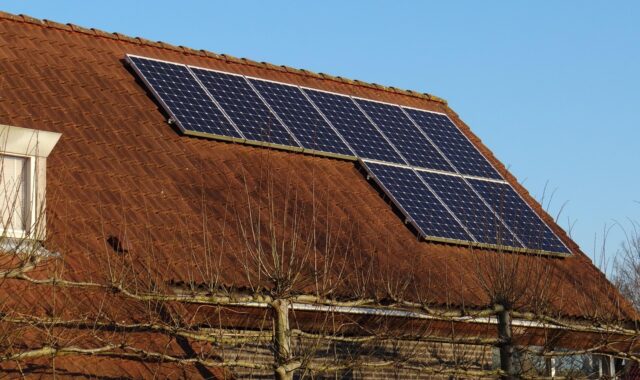
Sun King solar products explained for off-grid homes and small businesses

a[data-rs-seo-link]{text-decoration:underline!important;color:#1a56db!important;cursor:pointer!important;}a[data-rs-seo-link]{text-decoration:underline!important;color:#1a56db!important;cursor:pointer!important;}
What Sun King solar products cover
Sun King solar products cover much more than a single lamp or panel. Based on the company’s October 2026 product catalogue and public product pages, the range includes small solar lanterns, solar home systems, DC appliances, portable power stations, and hybrid inverter systems for homes and businesses. The products are aimed mainly at customers with no grid access, unreliable electricity, or frequent outages across Africa and Asia.
The range works like a product ladder. A buyer may start with lighting and phone charging, then move to multi-room power, compatible appliances, and larger AC backup systems as electricity needs grow. For more context on related clean-energy equipment, see our Solar Products section.

Why this product category matters now
Sun King’s product mix reflects a broader shift in off-grid solar. The category has moved beyond basic lighting into household electricity, cooling, communications, refrigeration, and small-business power. The United Nations 2026 SDG indicators reported that 655 million people still lacked electricity in 2024, even though global access remained near 92%. That gap is concentrated in remote, rural, low-income, and fragile areas where grid extension is often slow or expensive.
The World Bank Group and GOGLA’s 2026 Off-Grid Solar Market Trends Report described off-grid solar as a least-cost solution for at least 398 million people without electricity. The same report said affiliate off-grid solar products served 149 million people in 2025, up 26% from 2023. This does not mean every household needs the same kit. It does explain why product families such as Sun King’s have expanded into modular systems, pay-as-you-go financing, remote monitoring, and appliances designed for low-power solar use.
For product comparison, the more useful question is not simply “Which model is best?” It is “Which level of electricity service is required?” A student may need a small lamp and phone charging. A household may need multi-room lighting, a fan, and a television. A shop, clinic, or office may need AC power, refrigeration, computers, and longer backup during outages.
Product range at a glance
Sun King’s current range can be grouped into five practical categories. The boundaries are not always rigid: larger home systems can support add-on appliances, while inverter systems can support both DC and AC loads.
| Product group | Typical power scale | Main use | Best fit | Key limitation |
|---|---|---|---|---|
| Solar lanterns | Built-in or small external solar panels, up to about 5 W class | Portable light, phone charging, radio, music on selected models | Students, households needing first light, mobile use | Not intended for large appliances |
| Solar home systems | 7 W to 80 W solar power in listed HomePlus models | Multi-room lighting, phone charging, DC TVs, fans, radios, security lights | Off-grid or weak-grid homes needing basic electricity | Appliance support depends on model size |
| Solar appliances | Matched to Sun King systems or standalone solar charging | Fans, radios, TVs, security lights, refrigeration in selected systems | Households and small enterprises adding productive or comfort loads | Compatibility and availability vary by market |
| PowerPlay Pro | 800 Wh battery with 600 W output in the catalogue | Portable or wall-mounted power for lights, phones, laptops, routers, TV, selected refrigeration | Outage backup and moderate off-grid loads | Not for high-draw appliances above 600 W |
| PowerHub | Multi-kilowatt configurations, including 3.3 kW to 15–30 kW listed options | Hybrid solar and battery power for homes, businesses, and facilities | Higher-load users needing AC power and expansion | Requires system design and installation |
Solar lanterns and small solar appliances
Sun King’s lanterns are the entry point in the range. They are designed for affordable lighting, mobility, and basic device charging rather than full-home power. The October 2026 catalogue lists models such as Pico, Pro 400, Pro, and Boom. The differences are significant for day-to-day use. Pico is a compact lantern with 100 lumens of maximum brightness and up to 72 hours of runtime on low-power mode. Pro 400 increases output to 400 lumens and offers up to 100 hours on low-power mode. Pro offers 160 lumens and 36 hours on low-power mode. Boom combines 250 lumens with added functions such as FM radio, MP3 playback, speakers, a headphone jack, and Bluetooth.
The value of this group is its simplicity. A lantern can replace kerosene, candles, or disposable-battery lights in a household that needs dependable evening light. It can also work as a study light, shop counter light, or backup lamp during power cuts. Because several models include USB phone charging, they can reduce dependence on paid charging kiosks or distant grid points.
The limitation is clear. A lantern is not a refrigerator backup system, a whole-house fan system, or a desktop-computer power source. Buyers should treat specifications such as lumens, solar panel size, battery energy, and runtime as indicators of lighting service, not as proof that the product can power unrelated devices.
Solar home systems and compatible appliances
Sun King’s solar home systems sit in the middle of the product ladder. They move beyond one portable light into installed kits with solar panels, a battery-control unit, multiple lights, phone charging, and support for compatible DC appliances. The official catalogue lists HomePlus at 7 W of solar power, HomePlus Pro at 13 W, and HomePlus Max Lite and HomePlus Max at 80 W. Battery capacities in the same catalogue range from 19.2 Wh in HomePlus to 192 Wh in the Max models.
The performance range matters. HomePlus is positioned for basic lighting and standard feature-phone charging. HomePlus Pro expands lighting and supports both feature phones and smartphones. The Max models are designed for heavier use, including tablets and laptops, and can support add-ons such as DC-powered TVs, pedestal fans, extra lights, radios, torches, and security lighting when configured appropriately.
Sun King’s published materials emphasize lithium iron phosphate batteries in many systems, adjustable brightness, mobile phone charging, and high-efficiency monocrystalline solar panels. The company also describes a two-year warranty for solar home systems. In some models, GSM connectivity supports remote payment application and performance monitoring. For pay-as-you-go customers, that can reduce the need to enter payment codes manually and may help support teams monitor system performance.
For households, the buying decision should start with a load list. Count the lights, phones, and appliances that need to run at the same time. Then separate daytime loads from nighttime loads. A TV used for two evening hours is different from a fan expected to run through a hot night. Published low-power runtimes are useful, but real performance depends on brightness settings, solar charging conditions, appliance efficiency, battery age, and how often the system is fully recharged.
PowerPlay Pro and PowerHub for higher electricity needs
The biggest shift in Sun King’s range is the move from lighting-focused systems to AC power and hybrid storage. This is also where buyers need to be careful, because product names may sound similar while the use cases are very different.
PowerPlay Pro
PowerPlay Pro is presented as a portable and wall-mountable solar power station for essential AC and DC appliances. In the October 2026 catalogue, it is shown with an 800 Wh battery and 600 W power output. Bundle options include no solar panel, one 450 W solar panel, or two 450 W solar panels. The version with one 450 W panel is described as recharging in about 3–5 hours of sunlight, while the two-panel version is described as recharging in about 2–3 hours.
The catalogue gives examples of what PowerPlay Pro can support: lights, mobile phones, televisions, speakers, TV decoders, Wi-Fi routers, monitors, desktop computers, laptops, printers, pedestal fans, and high-efficiency refrigerators. It also states a hard limit that should not be overlooked: PowerPlay Pro cannot power appliances drawing over 600 W, such as many water pumps, electric irons, microwaves, blenders, electric kettles, toasters, and electric cookers. See also: Buying Guides.
PowerHub
PowerHub is the larger hybrid inverter and battery-storage range. It is intended for modern homes, businesses, public facilities, and other locations that need AC power beyond basic lighting. The catalogue describes PowerHub as modular and expandable, with hybrid inverters that can draw from solar panels and the grid where available. Listed configurations include PowerHub Plus at 3.3 kW, PowerHub Pro at 5 kW, PowerHub Max at 10 kW, and PowerHub Ultra at 15–30 kW. Battery capacity ranges from 5 kWh in the Plus configuration to up to 120 kWh in the Ultra range, depending on configuration.
PowerHub should be treated less like a boxed consumer device and more like an energy system. The right size depends on peak load, daily energy use, battery autonomy, solar array size, roof or ground space, grid availability, and whether the user needs backup only or near-continuous power. A small shop with lighting, a fan, and a phone-charging service has different needs from a clinic, school, or cold-storage business.
How EasyBuy and pay-as-you-go change the purchase decision
One reason Sun King is widely discussed in energy-access markets is its financing model. The company’s EasyBuy payment technology allows many customers to pay for products in small instalments rather than covering the full cost upfront. GOGLA’s 2025 market reporting said PAYGo sales increased sharply in 2025 across the affiliate market, reinforcing the importance of financing in off-grid solar adoption.
Pay-as-you-go can make a solar product accessible to a household that could not otherwise afford one. However, instalment financing is still a financial commitment. A customer should compare the cash price, total financed cost, payment frequency, service terms, warranty coverage, and what happens if payments are missed. This is especially important for larger systems where the product may be tied to remote monitoring or payment controls.
The lowest upfront payment is not always the best value, and the largest system is not automatically the right system. A well-matched smaller kit may deliver more reliable service than an oversized product used without enough solar charging or support.
What to check before choosing a Sun King product
- Availability by country: Sun King product names, prices, financing, and after-sales support vary by market. Always check the local Sun King channel or authorized seller.
- Appliance compatibility: DC TVs and fans may require compatible Sun King systems. Standard AC appliances usually need an inverter-based product such as PowerPlay Pro or PowerHub.
- Runtime assumptions: Published runtimes are based on specific conditions. Cloudy weather, heavy loads, low battery state, and older batteries can reduce runtime.
- Warranty and servicing: A solar product is only as useful as its after-sales network. Confirm warranty length, service access, replacement parts, and installation responsibilities.
- Total cost of ownership: Include instalment payments, accessories, replacement needs, installation, and any service charges rather than comparing only headline product prices.
- Future expansion: If the household expects to add a TV, fan, laptop, freezer, or business equipment later, it may be better to choose a system designed for expansion.
Bottom line for product comparison
Sun King solar products are best understood as a tiered energy-access platform. Lanterns cover portable lighting and basic charging. Solar home systems bring multi-room electricity and compatible appliances. PowerPlay Pro adds portable AC backup for moderate loads. PowerHub moves into designed, multi-kilowatt hybrid power for larger homes, businesses, and facilities.
The strongest comparison method is to start with the job the system must perform. For light and phone charging, a lantern or small home system may be enough. For TV, fans, and multi-room lighting, a HomePlus Max-style system may be more relevant. For routers, laptops, refrigerators, and outage backup, PowerPlay Pro or a PowerHub configuration deserves closer analysis. Product choice should be based on verified local availability, realistic load calculations, warranty terms, and the total cost of any financing plan.
Frequently asked questions
Are Sun King and Sunking the same brand?
Many people type “Sunking” as one word when searching online, but the company’s official brand style is Sun King. This article uses the official spelling while recognizing the common search term.
What can Sun King solar products power?
Small lanterns can provide lighting and basic phone charging. Solar home systems can power multiple lights, phones, and compatible DC appliances such as TVs, fans, radios, and security lights, depending on the model. PowerPlay Pro and PowerHub systems are designed for broader AC and DC use, but each has specific power limits.
Do all Sun King products use EasyBuy financing?
No. Sun King describes EasyBuy as available on almost all products, and the October 2026 catalogue lists some lanterns without EasyBuy availability. Financing options depend on the product and local market.
Can a Sun King system replace the electric grid?
It depends on the system size and the user’s loads. Lanterns and small home systems are not grid replacements. Larger PowerHub systems are designed to provide substantial household or business power, but they still need proper sizing, installation, and realistic expectations about energy use.
Are Sun King products suitable for U.S. homeowners?
Sun King’s core public product positioning focuses on off-grid and weak-grid markets in Africa and Asia. U.S. homeowners comparing rooftop solar should check local code-compliant solar installers, permitting rules, utility interconnection requirements, and battery options available in their state.