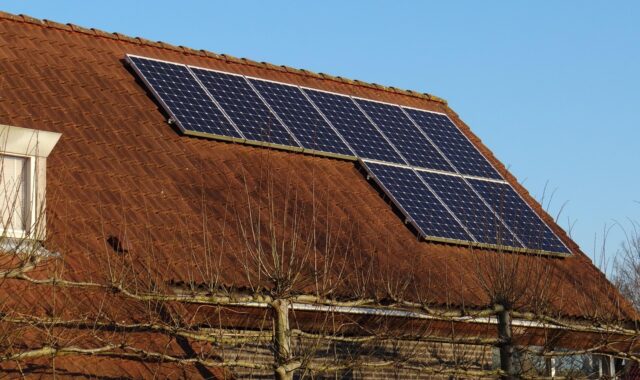
Solar PV module price trends in 2026 and what buyers should compare

a[data-rs-seo-link]{text-decoration:underline!important;color:#1a56db!important;cursor:pointer!important;}a[data-rs-seo-link]{text-decoration:underline!important;color:#1a56db!important;cursor:pointer!important;}
Solar PV module price snapshot for 2026
The solar PV module price in 2026 is best understood as a range, not a single global figure. Public market data points to very low global wholesale prices for crystalline silicon modules. U.S. delivered and distributed-market prices remain higher because of tariffs, domestic manufacturing rules, freight, inventory risk, and product qualification requirements.
The International Energy Agency’s Renewables 2026 report says global average wholesale crystalline silicon module prices rose 10% to 30% from 2025 levels, yet remained around USD 0.12 per watt. By comparison, SEIA and Wood Mackenzie reported that U.S. distributed-segment module prices averaged about USD 0.37 per watt direct current in Q2 2026. That spread is the main issue for buyers: the lowest global spot price is not necessarily the price a U.S. installer, developer, or distributor can actually use.

For readers tracking equipment decisions across the solar market, our solar products section covers related module, inverter, storage, and procurement topics.
Why there is no single solar PV module price
Solar module prices are usually quoted in dollars per watt direct current, but that simple unit can hide major commercial differences. A wholesale price may refer to a large international transaction before shipping, insurance, duties, domestic freight, warehousing, and margin. A delivered project price may include compliance documentation, warranty support, domestic content considerations, and the cost of holding inventory. A retail or small-volume price can be much higher because the buyer is paying for distribution, smaller order size, credit terms, and local availability.
Module technology also changes the comparison. A 550 W module and a 450 W module can both be priced per watt, but they may differ in cell type, efficiency, frame design, bifaciality, temperature coefficient, degradation rate, hail rating, fire classification, and warranty structure. The lower dollar-per-watt figure is not always the lower lifetime cost if the product needs more racking space, comes with weaker documentation, or limits project design.
| Price reference | Approximate 2026 figure | What it represents |
|---|---|---|
| Global wholesale crystalline silicon modules | About USD 0.12/W | IEA Renewables 2026 global average wholesale view, excluding many local market costs |
| U.S. distributed-segment module price | About USD 0.37/Wdc in Q2 2026 | SEIA and Wood Mackenzie reported market pricing for distributed solar |
| U.S.-assembled module index reports | Around USD 0.30/W in Q2 2026 in some market reporting | Reported pricing from U.S. module procurement data, not a universal quote |
These figures should not be read as quotes. They are market reference points from public reporting. Actual project pricing changes with order volume, delivery date, credit quality, product origin, technology, certification needs, and contract terms.
What pushed module prices down before 2026
The long-term decline in module prices came from scale, learning curves, manufacturing automation, larger wafers, higher cell efficiency, intense supplier competition, and the rapid expansion of Chinese solar manufacturing. IEA PVPS reported that global cumulative installed PV capacity reached about 2.96 TW by the end of 2025, showing how large the market has become. That scale helps explain why modules, once a much larger share of installed system cost, have become one of the most competitive energy hardware categories.
The sharpest recent price decline was not only a result of efficiency gains. It was also driven by supply-demand imbalance. IEA PVPS and IEA reports describe persistent solar manufacturing overcapacity, with module production exceeding annual installations and factory utilization below available capacity. In that environment, manufacturers compete aggressively for orders, and prices can fall below levels that many producers consider financially healthy.
Extremely low prices can therefore be both helpful and risky. They reduce equipment cost and can accelerate solar adoption. At the same time, they can squeeze manufacturer margins, raise questions about long-term warranty strength, and encourage trade actions in markets seeking to protect or build domestic manufacturing capacity.
Why prices rose in 2026 but stayed historically low
After the severe price pressure of 2024 and 2025, public market reporting in 2026 showed a partial rebound. The IEA’s Renewables 2026 report described a 10% to 30% rise in global average wholesale crystalline silicon cell and module prices compared with 2025. The same report noted that global average wholesale module prices remained around USD 0.12/W, still less than half of pre-2023 levels.
Several factors can lift prices from very low levels. Manufacturers may reduce production, retire older capacity, shift to newer technologies, or resist selling below cash cost. Upstream materials, including silver paste, solar glass, encapsulants, aluminum frames, wafers, and cells, can also move independently from finished module pricing. A change in one upstream material does not automatically determine the final module price, but it can affect margins and negotiation behavior.
Policy can matter as much as manufacturing cost. Trade duties, anti-dumping and countervailing duty cases, foreign entity of concern rules, domestic content requirements, and customs enforcement all influence where modules can be sourced and how much risk buyers attach to a shipment. In the United States, this is a major reason local delivered prices can remain far above global wholesale reference prices.
How U.S. pricing differs from global pricing
The U.S. solar market has a distinct pricing structure because procurement is shaped by trade policy, tax credit rules, domestic manufacturing investment, and supply-chain qualification. SEIA and Wood Mackenzie reported in their Q3 2026 Solar Market Insight that distributed-segment module prices reached about USD 0.37/Wdc in Q2 2026, down 16% year over year. That decline does not mean the U.S. price converged with global spot pricing; it means prices in that segment softened from a higher base.
Domestic module assembly has expanded quickly, but module assembly is only one part of the crystalline silicon supply chain. Cells, wafers, polysilicon, glass, frames, junction boxes, backsheets, and other materials can still expose manufacturers to imported inputs. SEIA’s 2026 supply-chain reporting highlighted large gains in U.S. module manufacturing capacity, while also noting that cell capacity and upstream components remain critical constraints. This creates a market where a product can be assembled domestically but still affected by global supply conditions and trade rules.
For buyers, the practical question is what the price includes. A U.S. project may pay more per watt for modules that reduce customs uncertainty, support domestic-content planning, meet lender requirements, or come with stronger local warranty support. A lower-priced import may still be attractive if it is compliant, bankable, available on schedule, and aligned with the project’s risk tolerance. See also: Buying Guides.
What buyers should compare beyond dollars per watt
A module quote should be evaluated as a project input, not as a standalone commodity. The first comparison is nameplate power and efficiency. Higher efficiency can reduce the number of modules, racking components, electrical connections, and land or roof area required for the same system size. That can offset a higher module price in space-constrained commercial and residential projects.
- Technology type: N-type TOPCon, heterojunction, bifacial modules, and remaining PERC products can have different performance and cost profiles.
- Degradation warranty: Compare first-year degradation, annual degradation, and warranted output at year 25 or year 30.
- Mechanical ratings: Wind, snow, and hail resistance can affect suitability for specific U.S. regions.
- Temperature coefficient: Modules with better high-temperature performance may produce more energy in hot climates.
- Certifications and documentation: UL, IEC, fire classification, traceability, and bill-of-material documentation can be essential for permitting, financing, and insurance.
- Delivery risk: A cheap module that arrives late can be more expensive than a higher-priced module delivered on schedule.
- Warranty support: Bankability, local representation, and claims handling matter because performance warranties last for decades.
Buyers should also separate module price from installed system cost. DOE and NREL benchmark work shows that U.S. PV system cost includes modules, inverters, structural balance of system, electrical balance of system, labor, permitting, interconnection, overhead, sales cost, and margin. As modules become cheaper, non-module costs can represent a larger share of the final installed price.
A simple way to translate price per watt into module cost
To see why price basis matters, consider a 550 W module. At USD 0.12/W, the module hardware value would be about USD 66 before many local costs. At USD 0.30/W, the same wattage equals about USD 165. At USD 0.37/W, it equals about USD 203.50. The module capacity is the same, but the procurement context changes the cost significantly.
| Price per watt | Example module size | Illustrative module cost |
|---|---|---|
| USD 0.12/W | 550 W | USD 66.00 |
| USD 0.30/W | 550 W | USD 165.00 |
| USD 0.37/W | 550 W | USD 203.50 |
This calculation is simple, but useful. It shows why a buyer should always ask whether the quoted price is ex-works, FOB, CIF, delivered duty paid, warehouse pickup, or installed as part of a full EPC package. Without that detail, two module prices can look comparable while representing very different commercial terms.
Outlook for module buyers
The 2026 market points to a mixed outlook. Global overcapacity continues to put downward pressure on prices, while manufacturers are trying to recover margins after a period of heavy losses. Policy changes, trade enforcement, and local-content rules can create regional price premiums. Technology transitions can also separate higher-value products from older inventory.
For U.S. buyers, the safest assumption is not that prices will only fall or only rise. A more practical approach is to track three layers at once: global wholesale indicators, U.S. delivered-price benchmarks, and the specific terms of each quote. If a project depends on tax credit qualification, domestic-content planning, or a fixed commercial operation date, supply certainty may be worth more than a few cents per watt. If a project is flexible and has strong procurement expertise, lower-priced compliant inventory may create savings.
The most useful solar PV module price comparison is therefore a total-value comparison: certified performance, delivered cost, compliance risk, warranty quality, and schedule certainty. Dollars per watt remains the starting point, but it should not be the final decision metric.
Frequently asked questions
What is a normal solar PV module price in 2026?
There is no single normal price. Public reporting shows global wholesale crystalline silicon modules around USD 0.12/W in 2026, while U.S. distributed-market module prices have been reported much higher, around USD 0.37/Wdc in Q2 2026. The correct benchmark depends on region, delivery terms, order size, and compliance requirements.
Why are U.S. solar modules more expensive than global spot prices?
U.S. prices can include tariffs, domestic freight, warehousing, distributor margin, compliance documentation, customs risk, and domestic manufacturing or content considerations. These factors can keep delivered U.S. prices above global wholesale references even when global manufacturing costs are low.
Should buyers wait for module prices to fall?
Waiting can save money if prices decline, but it can also create schedule and availability risk. For projects with interconnection deadlines, incentive deadlines, or construction commitments, certainty may be more valuable than trying to capture the lowest possible module price.
Is the cheapest module always the best choice?
No. The cheapest module can be a good choice if it is certified, bankable, available, and suitable for the site. Buyers should still compare efficiency, degradation, mechanical ratings, warranty support, documentation, and delivery terms before making a procurement decision.