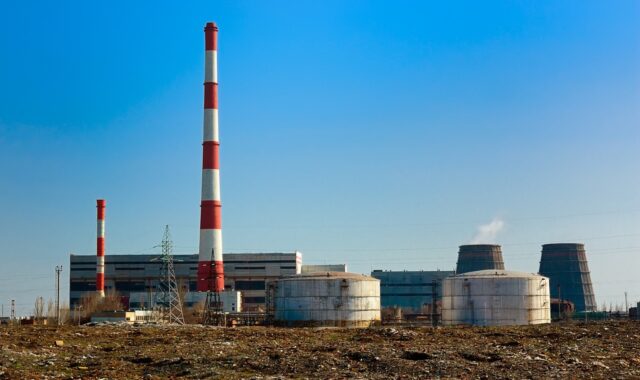
Grid energy storage is becoming essential power system infrastructure
a[data-rs-seo-link]{text-decoration:underline!important;color:#1a56db!important;cursor:pointer!important;}a[data-rs-seo-link]{text-decoration:underline!important;color:#1a56db!important;cursor:pointer!important;}
Why grid energy storage matters now
Grid energy storage refers to technologies that take in electricity when it is available and deliver it back when the power system needs it. Its role is growing because several pressures are converging on the grid at the same time: higher peak demand, more solar and wind generation, congestion on transmission lines, extreme weather risk, and longer interconnection queues for new power plants.
Storage cannot replace every generator or transmission project. What it can do is make the existing system more flexible. A well-sited storage asset can shift energy across hours, respond quickly to grid disturbances, and help operators use renewable output that might otherwise be curtailed.
The U.S. Energy Information Administration reported that utility-scale battery storage had reached nearly 52 GW of nameplate capacity by June 2026, up from 43.6 GW at the end of 2025. That pace of growth shows why storage is no longer a side topic in power markets. For more coverage of storage technologies and trends, visit our Energy Storage section.
What grid energy storage actually does
Storage is often described as a battery for the grid, but that shorthand can obscure the range of services involved. A storage asset may earn value from several functions, depending on its location, duration, interconnection agreement, market rules, and control software.
- Energy shifting: Charging during low-price or high-renewable periods and discharging during peak demand or higher-price hours.
- Operating reserves: Holding capacity available so grid operators can respond to sudden changes in supply or demand.
- Frequency regulation: Injecting or absorbing power within seconds to help maintain system frequency.
- Capacity contribution: Supporting resource adequacy when peak demand occurs, subject to rules that determine how much firm capacity the storage resource can claim.
- Congestion relief: Reducing stress on local lines by charging or discharging at strategic times.
- Black start and resilience: Helping restart parts of the system after outages when the project is designed and contracted for that service.
The key point is that grid energy storage is not a primary energy source. Batteries, pumped hydro, and other storage systems move energy across time. Their value comes from the difference between when electricity is produced and when it is needed, along with the speed and controllability they bring to grid operations.
Battery storage growth has changed the market
Lithium-ion batteries are the fastest-growing form of new grid storage in the United States. According to EIA data published in 2026, U.S. utility-scale battery storage capacity grew at an average annual rate of about 70% during the previous three years. Operators added 8.3 GW in the first six months of 2026, and EIA said reported plans pointed to another 54 GW over the following two and a half years if projects proceed as scheduled.
This growth is closely tied to solar. Many large battery projects are paired with photovoltaic plants because solar output often peaks before evening demand. Storage allows a project owner or grid operator to move part of that midday output into later hours. In regions with high solar penetration, this can reduce curtailment and help cover the steep evening ramp as solar generation falls.
Even so, a megawatt of battery capacity is not the same as a megawatt of conventional generation. Energy duration matters. A 100 MW battery with four hours of storage can deliver 100 MW for about four hours before it must recharge. That is useful for daily peaks, but it is not designed to cover multi-day low-renewable periods unless the system has enough storage duration, charging opportunities, and supporting resources.
The main technologies in grid energy storage
No single technology fits every storage need. The practical mix depends on geography, discharge duration, cycling frequency, permitting, safety requirements, and the grid services being procured.
| Technology | Typical strength | Main limitation |
|---|---|---|
| Lithium-ion batteries | Fast response, modular projects, strong fit for 1-4 hour applications | Duration, degradation, fire safety, supply chain exposure |
| Pumped storage hydropower | Large-scale energy capacity and long operating life | Site constraints, licensing time, environmental review |
| Flow batteries | Potential for longer duration and reduced energy-power coupling | Commercial scale and cost competitiveness still developing |
| Compressed air and thermal storage | Potential for long-duration applications | Project-specific geology, efficiency, and commercialization risk |
| Distributed batteries and virtual power plants | Can aggregate homes, businesses, EVs, and behind-the-meter assets | Coordination, customer participation, metering, and market access |
Lithium-ion batteries
Lithium-ion systems dominate recent battery deployment because manufacturing has scaled rapidly through electric vehicles and stationary storage. The International Energy Agency reported in 2024 that lithium-ion battery prices fell from around $1,400 per kWh in 2010 to below $140 per kWh in 2023. That cost decline has made grid-scale battery projects more financeable, especially where wholesale price spreads or capacity payments support the business case.
Pumped storage hydropower
Pumped storage remains the largest installed form of utility-scale storage by energy capacity in the United States. The Department of Energy has stated that the U.S. pumped storage fleet includes about 22 GW of generating capacity and roughly 550 GWh of energy storage. Its advantage is scale and duration. Its challenge is that new projects are complex infrastructure developments with long permitting and construction timelines.
Long-duration energy storage
Long-duration energy storage is generally discussed for applications beyond the daily four-hour battery window. The Department of Energy’s Long Duration Storage Shot set a target of reducing the cost of grid-scale storage for systems delivering 10 or more hours by 90% by 2030. That target does not mean all long-duration technologies have reached commercial maturity. It shows where research, demonstration projects, and procurement design are trying to push the market.
Market rules are turning storage into a grid resource
Storage became more visible in U.S. wholesale power markets after federal market reforms recognized that storage can act as both load and supply. FERC Order 841, issued on February 15, 2018, required regional transmission organizations and independent system operators to remove barriers to electric storage participation in capacity, energy, and ancillary service markets. The order also required participation models that recognize the physical and operational characteristics of storage resources.
FERC Order 2222, issued on September 17, 2020, expanded the framework by enabling distributed energy resource aggregations to participate in regional wholesale markets. That matters because grid energy storage is not limited to large projects connected to the transmission system. Smaller batteries, electric vehicles, thermal storage, and other distributed resources may provide grid services when they are aggregated and controlled under approved market rules.
These reforms do not automatically make every storage project profitable. They create a pathway for participation. Revenue still depends on market prices, capacity accreditation, interconnection costs, charging costs, round-trip efficiency, dispatch strategy, and contract structure.
Reliability value depends on duration, location, and controls
Storage can improve reliability, but only if planners model it realistically. A battery located behind a congested line may not help a load pocket during a transmission constraint. A four-hour resource may be valuable during a summer evening peak but less useful during a multi-day winter event unless it has reliable charging windows. A project designed for energy arbitrage may not provide black start capability unless that service is engineered and compensated. See also: Buying Guides.
Grid operators increasingly need inverter-based resources, including batteries, to meet performance standards. Standards and guidelines such as IEEE 1547 for distributed energy resource interconnection and NERC guidance for bulk power system-connected battery energy storage are part of the technical framework. Fire and installation safety standards, including NFPA 855 for stationary energy storage systems, are also important because project acceptance depends on safety, emergency response planning, and local permitting as well as economics.
Reliability also depends on operational visibility. A grid operator must know whether storage is charged, available, constrained, or reserved for another service. As storage portfolios grow, state of charge management becomes a system planning issue, not only a project-level optimization problem.
What still limits deployment
The biggest constraint is not demand for storage. Interconnection and deliverability are major bottlenecks. Lawrence Berkeley National Laboratory reported that more than 2,060 GW of generation and storage capacity was actively seeking grid connection in the United States at the end of 2025. Queue numbers are not the same as projects that will be built; many requests withdraw before operation. Still, the backlog shows that grid access, studies, network upgrade costs, and transmission capacity now shape deployment timelines.
Cost is another limit, even when battery prices fall. A storage project must cover equipment, inverters, controls, construction, land, interconnection, financing, insurance, augmentation, and operations. It also loses some energy through round-trip inefficiency, so the spread between charging and discharging value must be large enough to support the investment.
Policy uncertainty can also slow decisions. Tax credit rules, domestic content requirements, capacity market accreditation, fire codes, local siting rules, and wholesale market participation models all affect project economics. For long-duration technologies, the challenge is sharper because many options need early projects to prove performance, bankability, and operations at scale.
What to watch next
The next stage of grid energy storage will be less about whether storage works and more about where it creates the highest system value. Daily shifting batteries will continue to grow where solar penetration, peak demand, and market volatility create strong use cases. Pumped storage and other long-duration options will remain important for deeper flexibility needs, but their growth will depend on permitting, procurement signals, and credible cost reductions.
Three indicators deserve close attention. First, capacity accreditation rules will determine how much reliability value storage receives as penetration rises. Second, interconnection reform will decide how quickly storage can move from queue to operation. Third, virtual power plant programs will show whether distributed batteries and flexible loads can reliably perform like grid resources at scale.
For readers tracking the broader sector, the main takeaway is direct: grid energy storage is becoming an operating layer of the power system, not just an add-on to renewable energy. Its value will be highest when planners match the right storage duration, location, and market role to the specific grid problem being solved.
Frequently asked questions
Is grid energy storage the same as renewable energy?
No. Storage does not generate electricity from a fuel or natural resource. It stores electricity produced by other resources and delivers it later. Its climate and cost impact depend on what charges it, when it discharges, and what generation or grid investment it avoids.
Why are most new storage projects batteries?
Batteries are modular, fast to build compared with many large infrastructure projects, and well suited to short-duration services such as frequency regulation, peak shifting, and solar-plus-storage operations. Lithium-ion manufacturing scale has also reduced costs, although safety, degradation, and supply chain risks still matter.
Can storage replace transmission lines?
Sometimes storage can defer or reduce the need for a specific grid upgrade, especially where congestion occurs during limited hours. It is not a universal substitute for transmission. If a region needs large, continuous power transfers, new wires or other grid upgrades may still be required.
What is long-duration energy storage?
Long-duration energy storage generally refers to systems designed to discharge for longer periods than standard short-duration batteries. Many policy discussions focus on 10 hours or more, while some technologies aim at multi-day applications. Commercial readiness varies widely by technology.
What is the most important metric for a storage project?
There is no single metric. Power capacity in MW, energy capacity in MWh, discharge duration, round-trip efficiency, response speed, location, degradation, safety profile, and market access all affect value. A project with the right duration in the right location can be more useful than a larger project with limited deliverability.