New energy power generation guide for homes and small businesses
a[data-rs-seo-link]{text-decoration:underline!important;color:#1a56db!important;cursor:pointer!important;}a[data-rs-seo-link]{text-decoration:underline!important;color:#1a56db!important;cursor:pointer!important;}
What new energy power generation means for a buyer
New energy power generation usually refers to cleaner, more distributed ways to produce electricity, including solar photovoltaic panels, small wind systems, battery-supported solar, geothermal systems, microgrids, and other low-emission technologies. For most homes and small businesses, the useful question is not which technology is newest. It is which system fits the site’s load, budget, roof or land area, outage risk, utility rules, and maintenance capacity. Solar PV remains the most common entry point. Batteries add control and backup value. Small wind and hybrid systems are highly site-dependent and only make sense where the resource and permitting conditions are favorable.
The market context matters, but it should not drive the specification by itself. The International Energy Agency’s Global Energy Review 2026 reported that low-emissions sources, including renewables and nuclear, reached 43% of global electricity generation in 2025, while wind and solar together reached 17%. In the United States, the Energy Information Administration reported that natural gas and renewables continue to account for a growing share of power generation, while coal has declined over time. The takeaway is not that every site should buy the same system. Buyers now have more options, but they also have more interconnection, storage, safety, and incentive details to check before signing a contract.
For more practical equipment comparisons, installation questions, and purchase frameworks, visit our Buying Guides section.
Start with the load, not the equipment
A reliable new energy power generation plan starts with electricity demand. Before comparing panels, turbines, batteries, or inverters, collect at least 12 months of utility bills and note three numbers: annual kilowatt-hours, highest monthly usage, and peak demand if the bill shows it. Homes usually focus on energy use and backup loads. Small businesses may also pay demand charges based on their highest short-term power draw.
Separate the load into three groups:
- Essential loads: refrigeration, lighting, communications, medical devices, security systems, sump pumps, critical business equipment, and selected outlets.
- Flexible loads: EV charging, water heating, laundry, dishwashing, and other uses that can shift to sunny or lower-cost hours.
- High-power loads: central air conditioning, electric resistance heating, commercial refrigeration, compressors, welders, pumps, and production equipment.
This step prevents a common mistake: buying a generation system that looks large on paper but cannot support the loads that matter most during an outage. A 10 kW solar array may produce substantial energy over a year, but it will not automatically power a building when the grid is down unless the inverter, battery, transfer equipment, and controls are designed for backup operation. Likewise, a battery with a large energy rating may still have limited power output, which determines how many devices can run at the same time.
Use a simple planning rule: energy capacity answers “how long,” while power capacity answers “how much at once.” A 10 kWh battery can theoretically supply 1 kW for about 10 hours before losses and reserve settings, but it cannot run every high-power appliance unless its continuous and surge power ratings are adequate.
Compare common technologies before requesting quotes
The right system depends on the site. Use the following comparison as a buying filter, not a universal ranking.
| Technology | Best fit | Main limitation | Buyer question |
|---|---|---|---|
| Solar PV | Homes and businesses with usable roof or ground area and reasonable sun exposure | Output varies by time of day, season, shade, and weather | How much annual production is modeled, and what assumptions were used? |
| Solar plus battery storage | Sites that want backup power, time-of-use bill management, or better use of self-generated power | Higher upfront cost and more design complexity | Which loads will be backed up, and for how many hours? |
| Small wind | Rural or open sites with strong, consistent wind and permissive zoning | Poor economics in turbulent, obstructed, or urban locations | Is there a measured wind resource at tower height, not just a regional estimate? |
| Microgrid | Critical facilities, campuses, farms, remote sites, and businesses needing resilience | Requires controls, protection design, interconnection review, and usually professional engineering | Can the system intentionally island from the grid safely and legally? |
| Fuel-based backup generator | Long-duration backup where stored fuel is available | Fuel cost, emissions, noise, maintenance, and fuel availability during emergencies | Will it complement solar and storage or replace them for backup needs? |
Solar PV is often the easiest starting point because installer availability is broad and production modeling is relatively predictable. Still, production estimates should show the assumptions behind the number: shading analysis, roof orientation, equipment selection, degradation, local weather data, and utility rate structure. If a quote only shows system size and annual savings, ask for the full model.
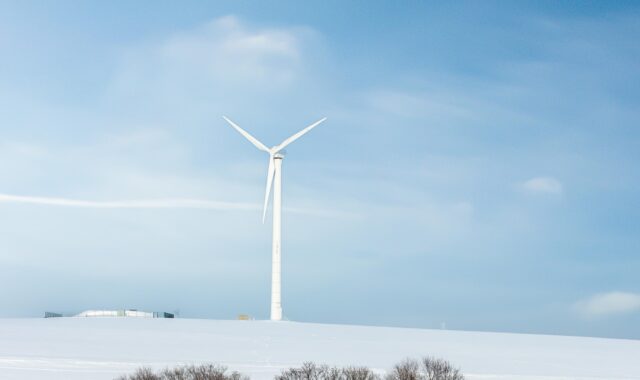
Small wind deserves extra caution. A turbine can perform well in the right setting, but buildings, trees, hills, and short towers can create turbulence that reduces output and increases wear. In many suburban and urban sites, solar is more predictable than wind. For remote properties, farms, telecom sites, or coastal and plains locations, wind may be worth a formal resource assessment.
Storage, inverters, and controls determine real-world value
Battery storage is not a generation source by itself, but it often determines how useful new energy power generation feels in daily operation. Batteries can store solar energy for evening use, reduce exposure to time-of-use rates, provide short-duration backup, and help a building use more of its own production. The Department of Energy describes distributed energy resources as assets such as rooftop solar, batteries, and generators that are connected at the distribution level rather than only at large central power plants.
The inverter is just as important. It converts DC electricity from solar panels or batteries into AC electricity used by most building loads. Some inverters are grid-following and shut down during an outage for safety. Others can support backup loads when paired with batteries and proper transfer equipment. If backup is a priority, ask the installer to show the one-line diagram and specify whether the system can form a local grid for selected circuits.
Microgrids add another layer. A microgrid is a local electrical system with defined boundaries that can disconnect from the larger grid and operate independently. For a single home, this may look like solar, a battery, a smart panel, and selected backup circuits. For a business or campus, it may include solar, storage, generators, controllable loads, and an energy management system. The more critical the load, the more important it is to move from a sales quote to an engineered design.
Incentives, interconnection, and safety checks to verify in 2026
Incentives can change project economics, but buyers should not rely on outdated assumptions. As of November 3, 2026, the federal Residential Clean Energy Credit that previously covered qualified residential solar, wind, geothermal, fuel cell, and battery storage property applied to systems installed from 2022 through December 31, 2025, according to IRS guidance. Homeowners considering a project in 2026 should verify current federal, state, local, and utility incentives before calculating payback. Businesses may face different tax credit rules, eligibility tests, construction deadlines, and documentation requirements, so tax advice should come from a qualified professional.
Interconnection is the next checkpoint. A grid-tied system usually requires utility approval before it can operate. The process may include an application, equipment review, meter change, engineering study, inspection, and permission to operate. Larger systems, export-capable batteries, and commercial projects can face longer timelines. Ask the installer who handles the application, what fees may apply, whether the system is export-limited, and how long local approvals usually take. See also: Charging Equipment.
Safety and code compliance should be treated as non-negotiable. The IEEE 1547-2018 standard addresses interconnection and interoperability requirements for distributed energy resources connected to electric power systems. Stationary battery installations may also be affected by fire and electrical requirements, including NFPA 855, whose 2026 edition addresses safety for stationary energy storage systems. Local authorities may adopt different code editions, so the controlling requirement is the one enforced by the authority having jurisdiction where the system is installed.
A practical buying checklist
Use this checklist before comparing final proposals:
- Define the objective: lower bills, backup power, emissions reduction, energy independence, resilience, or a combination.
- Document the load: collect bills, identify essential circuits, and note high-power equipment.
- Check the site: roof age, structural condition, shading, available land, wind exposure, battery location, and access for maintenance.
- Review utility rules: net metering, export limits, time-of-use rates, demand charges, interconnection fees, and required equipment.
- Compare assumptions: production model, battery usable capacity, degradation, replacement timing, financing cost, and maintenance.
- Ask for documentation: equipment datasheets, warranties, system diagram, permit plan, interconnection plan, and monitoring details.
- Clarify backup limits: which circuits are backed up, expected runtime, recharge behavior, and what happens during several cloudy days.
- Verify installer qualifications: licensing, insurance, references, code experience, and responsibility for warranty claims.
A strong proposal should make tradeoffs visible. A larger solar array may improve annual production but still not solve nighttime outages without storage. A larger battery may improve backup runtime but may not pay for itself if utility rates are flat and outages are rare. A generator may cover long outages but brings fuel and maintenance obligations. The best design is the one that matches the site’s actual risk and operating pattern.
How to read quotes without being misled
Do not compare quotes only by headline price. Compare cost per watt for solar, usable kilowatt-hours for batteries, backed-up circuits, inverter capability, warranty terms, estimated annual production, and financing charges. If the quote includes projected savings, ask whether it assumes utility rate inflation, incentive availability, battery cycling revenue, or changes in net metering. Conservative assumptions are usually more useful than optimistic payback claims.
For business buyers, also ask whether the system affects demand charges, power factor, insurance, roof warranties, and operations during construction. If the facility has critical loads, a commissioning test should verify that the system performs as designed. For homes, the homeowner should receive clear instructions on monitoring, emergency shutoff, battery reserve settings, and what the system will and will not power during an outage.
The central lesson is simple: new energy power generation is a system decision, not a single-product purchase. Hardware matters, but design, interconnection, controls, safety, and local economics decide the outcome.
Frequently asked questions
Is solar always the best new energy power generation option?
No. Solar is often the most practical option for homes and small businesses with good sun exposure, but it is not automatically best for every site. Shaded roofs, limited space, weak interconnection terms, or high backup needs may make storage, efficiency upgrades, load management, or hybrid systems more important.
Do batteries let solar panels work during a blackout?
Only if the system is designed for backup operation. Many grid-tied solar systems shut down during an outage unless they include compatible batteries, inverters, transfer equipment, and controls. Buyers should ask exactly which circuits will remain powered and for how long.
How long should a backup battery run a home or business?
Runtime depends on usable battery capacity and the size of the connected load. A battery may run essential loads for hours, but high-power appliances can drain it quickly. The most reliable approach is to create an essential-load panel and size the battery around those circuits.
Should a buyer wait for newer technology?
Waiting can make sense if the current site is not ready, the roof needs replacement, or utility rules are uncertain. But buyers should not wait only because a better product may appear. Current solar, storage, inverter, and control systems are mature enough for many applications, provided the design is site-specific and code-compliant.
What is the biggest mistake when buying a system?
The biggest mistake is choosing equipment before defining the goal. A bill-savings system, an outage-resilience system, and a critical-load microgrid may use similar components, but they are designed differently. Start with the load, the outage requirement, and the utility rules, then choose the hardware.