How to choose an EV charging cable for home and public charging
a[data-rs-seo-link]{text-decoration:underline!important;color:#1a56db!important;cursor:pointer!important;}a[data-rs-seo-link]{text-decoration:underline!important;color:#1a56db!important;cursor:pointer!important;}
What an EV charging cable actually does
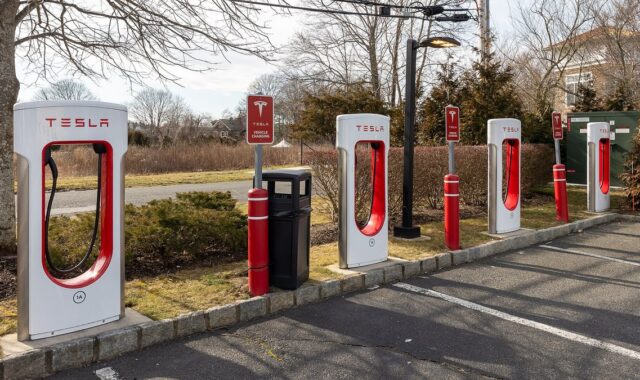
An EV charging cable is more than a plug on a heavy wire. It is part of an electric vehicle supply equipment system that has to match the vehicle inlet, charging level, current rating, installation environment and safety listing. For most U.S. drivers, the choice falls into one of three situations: a portable Level 1 cordset for a standard outlet, a Level 2 home charging cable attached to a wall-mounted EVSE, or the tethered cable already built into a public DC fast charger.
The cable alone cannot make a vehicle charge faster. Charging speed is limited by the power supply, EVSE rating, connector rating, cable design and the vehicle’s onboard or DC charging capability. For more equipment guides, see our Charging Equipment section.
Start with the charging level, not the plug shape
A common buying mistake is to choose by connector appearance before confirming the charging level. The U.S. Department of Energy’s Alternative Fuels Data Center separates everyday EV charging into AC Level 1, AC Level 2 and DC fast charging. That distinction matters because AC charging sends alternating current to the vehicle’s onboard charger, while DC fast charging sends direct current from the station to the battery through a different power path.
| Charging situation | Typical cable arrangement | What the buyer should check |
|---|---|---|
| AC Level 1 home charging | A portable cordset used with a 120 V outlet | Outlet condition, cordset listing, manufacturer instructions and whether the charge rate fits daily driving needs |
| AC Level 2 home or workplace charging | A wall-mounted or pedestal EVSE with an attached output cable | Connector type, amperage, circuit capacity, cable length, outdoor rating and whether installation must be hardwired |
| Public DC fast charging | A heavy tethered cable permanently attached to the station | Vehicle connector compatibility, adapter approval, station power and vehicle DC charging limits |
For daily use, Level 2 is often the practical home-charging upgrade because it can refill many vehicles overnight when the electrical system supports it. A driver with short daily mileage may still find a properly used Level 1 cordset adequate. The cable choice should follow the actual charging pattern, parking layout and vehicle limits rather than a general assumption that higher power is always the best answer.
Connector compatibility is changing in North America
Connector choice is the part of EV charging cable selection that has changed most visibly. EPA consumer guidance has long identified J1772 as the common connector for Level 1 and Level 2 AC charging on many North American EVs. CCS1 adds two larger DC pins below the J1772-style interface for DC fast charging. At the same time, SAE International’s J3400 standardization has turned the Tesla-developed North American Charging System, often called NACS, into an open standard path for broader industry use.
| Connector | Common use | Practical meaning for cable buyers |
|---|---|---|
| SAE J1772 | AC Level 1 and Level 2 charging on many North American non-Tesla EVs | Still important for home and public Level 2 charging, especially for vehicles already on the road |
| CCS1 | North American DC fast charging for many existing non-Tesla EVs | Relevant mainly at public fast chargers; not the same as a simple Level 2 cable |
| SAE J3400/NACS | AC and DC charging through a compact connector design in North America | Increasingly important for new vehicles and charging equipment, but existing vehicle compatibility must be verified |
| Type 2 and CCS2 | Common in Europe and other markets | Usually not the right choice for a U.S.-market vehicle unless the vehicle and region require it |
The safe rule is straightforward: match the cable to the vehicle inlet and the charging mode. A NACS-to-J1772 adapter for AC charging is not automatically suitable for DC fast charging. A CCS fast-charging adapter is also not a substitute for a home Level 2 cable. Use only adapters and cable assemblies approved by the vehicle maker, charger maker or a recognized testing program.
Match amperage, voltage and cable length to real use
An EV charging cable must be rated for the current it is expected to carry. For AC Level 2 equipment, approximate power is calculated as volts multiplied by amps, divided by 1,000. A 240 V, 32 A charging session is about 7.7 kW before normal losses. A 240 V, 48 A session is about 11.5 kW. The vehicle may accept less if its onboard charger has a lower limit, so a higher-rated cable or EVSE is not always a real-world upgrade.
| Use case | Common planning direction | Important limitation |
|---|---|---|
| Short commute or plug-in hybrid | Level 1 or modest Level 2 may be enough | Slow charging can become inconvenient after long trips or frequent driving days |
| One full battery EV parked overnight | Level 2 in the 32 A to 40 A range is often practical where the circuit supports it | The branch circuit, receptacle or hardwired connection must be sized by code and installation conditions |
| High-mileage driving or multiple EVs | Higher-current Level 2, load management or multiple charging points may be needed | Panel capacity, utility rules and local electrical code can become the deciding factors |
Cable length is not only a convenience feature. A longer cable can add weight, drag, storage problems and trip hazards. U.S. National Electrical Code Article 625 has generally limited the overall usable EVSE cord and cable length to 25 feet unless the equipment includes a listed cable management system. Local jurisdictions adopt and amend electrical codes differently, so the installation authority and a licensed electrician should confirm the rule for a specific project.
Instead of relying on extension cables, plan the EVSE location around the charge port positions of the vehicles that will use it. A centered garage wall may work for one car and be awkward for another if the charge port is on the opposite rear quarter. For outdoor parking, consider snow, puddles, driveway traffic, door swing, cable holsters and whether the connector can be stored off the ground.
Safety marks matter more than marketing terms
High-current EV charging is a continuous electrical load, so small weaknesses can become heat problems over time. A polished product photo does not prove that a cable is appropriate for a U.S. installation. Look for equipment that is listed or certified by a recognized testing organization for its intended market. UL Solutions identifies standards such as UL 2594 for EV supply equipment, UL 2251 for EV plugs, receptacles and couplers, and UL 2231 for personnel protection systems. International cable programs may also reference IEC 62752 for in-cable control and protection devices or the IEC 62893 series for EV charging cables.
- Listing and certification: Prefer equipment with a clear safety listing from a recognized laboratory, not only vague claims such as premium grade or industrial quality.
- Connector and cable rating: The connector, cable, plug, receptacle and EVSE settings must work together. The lowest-rated part controls the safe limit.
- Weather suitability: Outdoor charging requires equipment rated for outdoor use and installed according to the manual. Rain resistance does not mean a connector should sit in standing water.
- Strain relief and storage: The cable should hang without sharply bending at the EVSE, connector or wall plug. A holster helps keep contacts cleaner and reduces damage.
- Heat monitoring: Stop using equipment that shows discoloration, melting, a hot plug, burning smell, cracked insulation or intermittent charging faults.
- Replacement rules: Do not swap an EVSE output cable with a generic part unless the manufacturer lists it as a compatible replacement.
Generic extension cords and unlisted EV charging extensions are especially risky because they may bypass the cable length, temperature sensing, ground-fault protection and mechanical assumptions built into the original EVSE design. When in doubt, move the EVSE or install a properly located charging point rather than stretching a marginal cable setup.
How to compare cables for home, apartment and travel use
Home garage charging
For a garage, the best EV charging cable is usually the one attached to a listed Level 2 EVSE installed close enough to reach the vehicle without crossing a walking path. If the EVSE is plug-in, receptacle quality and duty rating matter because EV charging can run for hours. If the EVSE is hardwired, the installation may be cleaner, less exposed to receptacle wear and better suited to higher amperage, but it is less portable. See also: Buying Guides.
Outdoor driveway charging
Outdoor charging requires more attention to cable jacket durability, water exposure, sunlight, temperature and storage. The connector should have a secure holster, and the cable should not lie where it can be driven over, trapped under a garage door or buried under snow. For shared driveways or multifamily parking, cable routing can also affect accessibility and trip risk, so site design is as important as connector choice.
Travel and backup charging
A portable cordset can be useful for travel or emergency charging, but it should not be treated as a universal solution. Confirm the input plug, voltage, amperage settings and outlet type before relying on it. Many portable units can charge slowly from 120 V and faster from certain 240 V receptacles, but only if the unit is designed for that use and the outlet is properly installed. Adapters for RV-style or dryer-style outlets should be used only when expressly allowed by the cordset manufacturer and safe for the circuit.
J3400/NACS transition and what it means for buyers
The North American connector transition is real, but it does not make every existing cable obsolete at once. SAE International released a J3400 Technical Information Report in December 2023, advanced the work through a Recommended Practice in 2024, and continued connector and inlet dimensional standardization work in 2025. Meanwhile, many automakers announced plans to adopt J3400/NACS on North American vehicles beginning with 2025 model-year timing or through adapters for earlier vehicles.
| Period | What changed | Buyer takeaway |
|---|---|---|
| Before the transition | J1772 and CCS1 dominated non-Tesla AC and DC charging in North America | Many existing EVs still need J1772 or CCS1 access |
| 2023 to 2025 | SAE standardization moved J3400/NACS from a proprietary-origin design toward broader industry standards | New vehicles and chargers increasingly require a J3400/NACS compatibility check |
| 2026 buying environment | Mixed fleets remain common: older vehicles, new vehicles, adapters and dual-connector public sites coexist | Buy for the vehicle and charging location you have, not only for a future connector expectation |
For home charging, this may mean choosing a J1772 Level 2 EVSE if the household vehicle uses J1772, choosing a J3400/NACS unit for a vehicle with that inlet, or selecting an EVSE and adapter combination that is explicitly supported. For public charging, check whether the station cable and any adapter support the exact charging mode involved: AC Level 2, CCS DC fast charging or J3400/NACS DC fast charging.
Buying checklist before you order
- Identify the vehicle inlet: J1772, CCS1, J3400/NACS, Type 2, CCS2 or another connector.
- Confirm the charging mode: AC Level 1, AC Level 2 or DC fast charging.
- Check the maximum AC charging rate of the vehicle’s onboard charger.
- Confirm the EVSE amperage and whether the electrical circuit can support it.
- Choose a cable length that reaches comfortably without an extension.
- Look for a recognized safety listing and a manual that matches the exact model number.
- Verify outdoor, temperature and enclosure ratings if the cable will be used outside.
- Use only manufacturer-approved adapters and replacements.
- Plan connector storage so the handle and contacts stay dry, clean and off the ground.
- Have a qualified electrician review any new Level 2 installation, load calculation or panel upgrade.
Frequently asked questions
Is an EV charging cable the same as an EV charger?
Not exactly. In AC charging, the wall unit or portable cordset is usually EVSE that safely supplies power, while the vehicle’s onboard charger converts AC to DC for the battery. In DC fast charging, the charging equipment outside the vehicle performs the AC-to-DC conversion and sends DC power through a larger station cable.
Can a better cable make my EV charge faster?
Only if the cable or EVSE was the limiting factor and the rest of the system supports the higher current. Charging speed is limited by the circuit, EVSE settings, connector and cable ratings, vehicle onboard charger for AC charging, battery temperature and state of charge. A higher-rated cable will not override the vehicle’s own limits.
Do I need J1772 or J3400/NACS for home charging?
You need the connector that matches your vehicle and charging plan. Many existing North American EVs use J1772 for AC Level 1 and Level 2 charging. Tesla vehicles and a growing number of new North American models use or are moving toward J3400/NACS. If using an adapter, confirm that it is approved for AC charging and for the specific vehicle and EVSE combination.
Is it safe to use an EV charging extension cable?
In most home situations, using a generic extension is the wrong solution. EV charging uses sustained current, and unlisted extensions can create heat, grounding, weather and mechanical risks. A safer approach is to install the EVSE where the listed output cable reaches the vehicle, or use equipment that includes a listed cable management system when permitted by code.
How often should an EV charging cable be inspected?
Inspect the cable and connector regularly, especially before long charging sessions or after outdoor exposure. Look for cracks, cuts, flattened sections, loose pins, corrosion, discoloration, water intrusion, damaged latches and unusual heat. Stop using the equipment until it is evaluated if any of those signs appear.