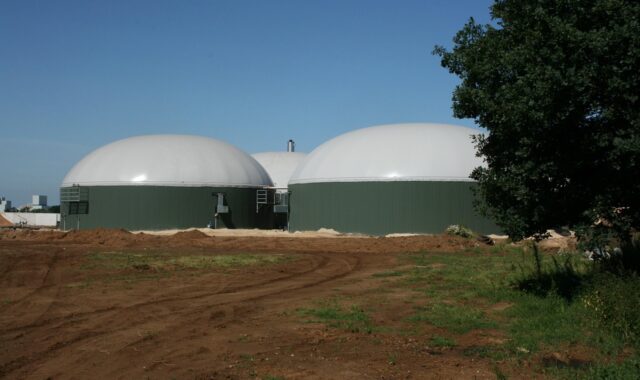
Smart energy storage and the shift to a more flexible grid

Smart energy storage combines batteries or other storage assets with software, sensors, power electronics and communications. The goal is to charge, discharge and coordinate electricity when it has the most value. This matters as the grid absorbs more solar, wind, electric vehicles, data centers and weather-sensitive demand, all of which increase the need for flexibility.
In practical terms, the “smart” layer turns storage from a passive backup device into an active grid resource. It can shift solar power into evening hours, reduce demand charges, support frequency and voltage, participate in virtual power plants and improve resilience during outages. The technology is advancing quickly, but its value still depends on sound design, cybersecurity, safety standards and realistic operating limits.

What makes energy storage smart
A conventional storage system stores electricity and releases it later. Smart energy storage adds decision-making. It monitors state of charge, battery temperature, equipment status, utility rates, building load, renewable output, weather conditions and grid signals. A controller then decides when to charge, when to discharge and when to hold capacity in reserve.
The core components usually include a battery management system, an energy management system, a power conversion system, metering, communications equipment and software that can follow defined operating rules. In a home, that may mean charging from rooftop solar during the day while reserving enough battery capacity for an outage. In a commercial building, it may mean reducing peak demand charges without giving up backup capability. At utility scale, it may mean bidding into energy and ancillary service markets, responding to grid operator dispatch and supporting local reliability.
The difference is not simply automation. Smart storage works best when it can optimize across several objectives that often compete with each other. A battery cannot fully maximize arbitrage revenue, backup reserve, renewable self-consumption and battery life at the same time. The smart layer sets those trade-offs according to the use case.
Why the grid needs smarter storage now
Battery storage has moved from a niche resource to a major part of power system planning. The U.S. Energy Information Administration reported in August 2026 that U.S. utility-scale battery storage reached nearly 52 GW of nameplate capacity by the end of June 2026, after adding 8.3 GW in the first half of the year. EIA also reported that operators expected another 54 GW to come online over the following two and a half years, based on developer plans. These figures describe power capacity, not the number of hours the batteries can run, but they show how quickly storage has become central to grid development.
The reason is straightforward: solar and wind output does not always match demand. Solar generation often peaks in the middle of the day, while residential and commercial demand can remain high into the evening. Storage can move low-cost or surplus electricity into higher-value hours. The International Energy Agency has also described battery storage as a key technology for integrating variable renewable power and stabilizing grids, while noting that deployment in the power sector more than doubled in 2023.
Smart controls make this growth more useful. A battery that only follows a fixed schedule may miss price spikes, congestion events, solar forecast errors or grid reliability needs. A smarter system can adjust dispatch as conditions change. That does not make storage a complete substitute for transmission, generation, efficiency or long-duration resources, but it does make short-duration batteries more valuable within a balanced grid portfolio.
Key applications for smart energy storage
Solar shifting and renewable smoothing
One of the clearest uses is pairing storage with solar. A smart energy storage system can charge when solar output is high and discharge when production falls. At larger sites, controls can also smooth sudden changes in output caused by clouds, helping the plant meet interconnection requirements and reduce stress on local feeders.
Peak reduction for buildings and campuses
Commercial and industrial customers often pay demand charges based on their highest short interval of power use. Smart storage can monitor facility load and discharge before the metered peak rises. This requires more precision than simple time-of-use shifting because the system must forecast building demand and avoid draining the battery too early.
Backup power and resilience
Backup power is a major reason homeowners, hospitals, campuses and data-sensitive facilities consider storage. The smart element is reserve management. If storms are forecast or grid outage risk is elevated, the system may prioritize a higher state of charge instead of daily bill savings. For critical loads, storage is often combined with solar, generators, microgrid controls or load-shedding systems.
Grid services and virtual power plants
Distributed batteries can be aggregated into a virtual power plant, along with flexible loads, EV chargers, smart thermostats and rooftop solar. The Federal Energy Regulatory Commission’s Order No. 2222, issued in 2020 with later updates, was designed to reduce barriers for distributed energy resources to participate in regional wholesale markets through aggregation. The opportunity is significant, but implementation still depends on regional market rules, utility coordination, metering, telemetry and customer participation.
For more background on storage technologies and related market updates, visit the site’s Energy Storage section.
The software layer is becoming as important as the battery
In many projects, battery cells receive most of the attention, but operating software determines much of the real-world value. A smart storage platform may include forecasting, optimization, dispatch control, alarm management, degradation monitoring and reporting. It may also coordinate with solar inverters, building management systems, EV charging software and utility demand response programs.
Good controls understand constraints. Batteries have maximum charge and discharge rates, minimum and maximum state-of-charge limits, thermal limits, warranty conditions and degradation patterns. Frequent cycling can increase revenue in some markets, but it can shorten useful life if not managed properly. Operating at very high or very low states of charge can also affect longevity. A credible optimization strategy therefore weighs near-term savings against long-term asset health.
At grid scale, the inverter is also critical. Battery systems connect to the grid through power electronics, and modern inverter standards are increasingly important as more resources connect without traditional rotating machinery. U.S. Department of Energy materials on inverter-based resources identify IEEE 1547-2018 for distributed resources and IEEE 2800-2022 for transmission-connected inverter-based resources as important interoperability and performance standards. In plain terms, the grid increasingly needs storage systems that do more than inject energy; they also need to behave predictably during disturbances.
Safety, codes and cybersecurity cannot be afterthoughts
Smart energy storage introduces both electrical and digital risk. On the safety side, lithium-ion systems must be designed, installed and operated with fire protection, spacing, thermal management, emergency response and equipment listing in mind. In the United States, NFPA 855 is widely referenced for stationary energy storage installation requirements, while UL 9540 and UL 9540A are commonly associated with system listing and thermal runaway fire propagation testing. These standards do not eliminate risk, but they provide a framework for evaluating and mitigating hazards. See also: Buying Guides.
Cybersecurity is equally important because smart storage depends on communications. A poorly secured system could expose operational data, accept unauthorized commands or become a weak point in a broader distributed energy network. NIST SP 1800-32, published in 2022, focuses on securing distributed energy resources and highlights capabilities such as communications protection, data integrity, authentication, access control, monitoring and malware detection. As storage becomes more connected, cybersecurity should be treated as part of system reliability rather than an optional IT feature.
Project owners should ask practical questions before deployment: Who can send control commands? How are software updates verified? What happens if communications fail? Is there a safe local operating mode? Are alarms visible to the right operators? Can the system separate customer optimization from grid dispatch obligations? These questions are especially important for virtual power plants and multi-site fleets.
How to evaluate a smart energy storage project
The right storage design starts with the job to be done. A residential backup system, a supermarket demand-charge system, a solar-plus-storage plant and a utility substation battery may use similar battery chemistry but very different controls and business cases. Buyers and project teams should avoid judging systems only by kilowatt-hours.
| Evaluation area | Why it matters |
|---|---|
| Power rating | Determines how much electricity the system can deliver at once. |
| Energy capacity | Determines how long the system can sustain output. |
| Control strategy | Defines whether the system prioritizes bills, backup, grid services or a mix. |
| Round-trip efficiency | Shows how much energy is lost between charging and discharging. |
| Cycle life and warranty | Indicates how usage patterns may affect long-term economics. |
| Safety compliance | Connects the design to applicable codes, listings and emergency planning. |
| Cybersecurity | Protects communications, data and control functions. |
A useful feasibility study should compare expected revenue or savings against degradation, maintenance, interconnection costs, permitting time, software fees and operational complexity. It should also test more than one operating scenario. A project that looks strong under a single price forecast may be less compelling if market rules, demand charges or solar export policies change.
Limits and trade-offs to understand
Smart storage is powerful, but it is not a cure-all. Most lithium-ion battery projects today are designed for short-duration applications, often in the range of two to four hours, although longer durations exist. The National Renewable Energy Laboratory’s 2024 Annual Technology Baseline represents utility-scale lithium-ion storage across two-, four-, six-, eight- and ten-hour durations and assumes lithium iron phosphate has become the primary stationary storage chemistry since 2022. That is a useful planning benchmark, not a guarantee that every project will perform the same way.
Another limitation is that storage moves energy in time; it does not create energy. If a region faces a multi-day shortage of fuel, wind, sunlight or transmission availability, short-duration batteries can help with peaks but may not solve the entire adequacy problem. Long-duration storage, demand flexibility, transmission expansion, diverse generation and efficiency may all be needed.
There is also a coordination challenge. The same battery may be valuable to a customer, a utility, a grid operator and an aggregator, but those parties may want different behavior at the same moment. Clear contracts, dispatch rules and data access are essential. Without them, the smart system may be technically capable but commercially constrained.
What comes next
The next stage of smart energy storage will likely be defined by coordination rather than hardware alone. More systems will be connected to distributed energy resource management platforms, virtual power plant programs and dynamic tariffs. More batteries will sit behind the meter at homes, businesses, campuses and data centers, while utility-scale systems continue to support solar growth and grid reliability.
The most successful projects will treat storage as an intelligent operating asset. That means pairing the right battery with transparent software, secure communications, standards-based interconnection, realistic revenue models and disciplined safety practices. For energy users and grid planners, the central question is shifting from “How big is the battery?” to “How well can this storage system respond to changing grid conditions?” That is the real promise of smart energy storage.
Frequently asked questions
Is smart energy storage the same as a battery energy storage system?
Not exactly. A battery energy storage system refers to the hardware and related equipment that store and deliver electricity. Smart energy storage adds advanced controls, communications and optimization software so the system can respond to prices, load, renewable output, outage risk and grid signals.
Can smart storage lower electricity bills?
It can, but results depend on the tariff, load profile, system size, software settings and battery cycling limits. The strongest cases often involve demand-charge management, time-of-use rates, solar self-consumption or participation in demand response and aggregation programs.
Does smart energy storage work without solar panels?
Yes. Storage can charge from the grid and discharge during high-cost or high-demand periods. However, pairing storage with solar can add value by increasing on-site use of solar electricity and providing backup power when the system is designed for islanded operation.
What is the biggest risk in smart storage projects?
The biggest risk is usually a mismatch between expectations and operating reality. Projects can underperform if dispatch rules are unclear, market revenues are overestimated, cybersecurity is weak, safety requirements are underestimated or battery degradation is ignored.