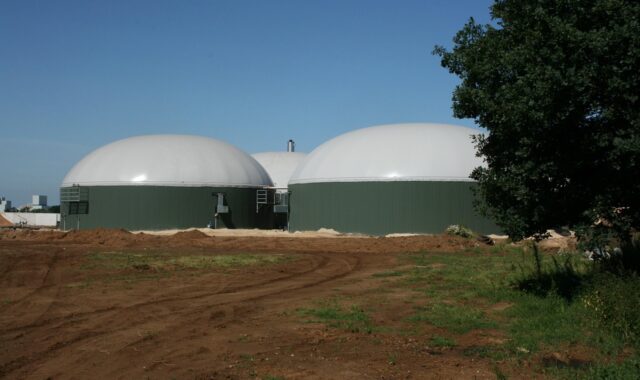
How energy storage plants are changing grid reliability and renewable power
a[data-rs-seo-link]{text-decoration:underline!important;color:#1a56db!important;cursor:pointer!important;}a[data-rs-seo-link]{text-decoration:underline!important;color:#1a56db!important;cursor:pointer!important;}
Energy storage plants are shifting from backup assets to grid infrastructure
Energy storage plants store electricity when supply is abundant or prices are low, then release it when the grid needs capacity, flexibility or fast response. In the United States, the clearest growth signal is utility-scale battery storage: the U.S. Energy Information Administration reported on August 7, 2026, that operational utility-scale battery capacity reached 43.6 GW by the end of 2025 and nearly 52 GW after another 8.3 GW was added in the first half of 2026.
Those numbers do not mean every project is simple to build or guaranteed to earn an attractive return. They do show that storage has become part of core grid planning, especially in markets managing solar growth, peak demand, congestion and reliability needs. For more coverage of the sector, visit Energy Storage.
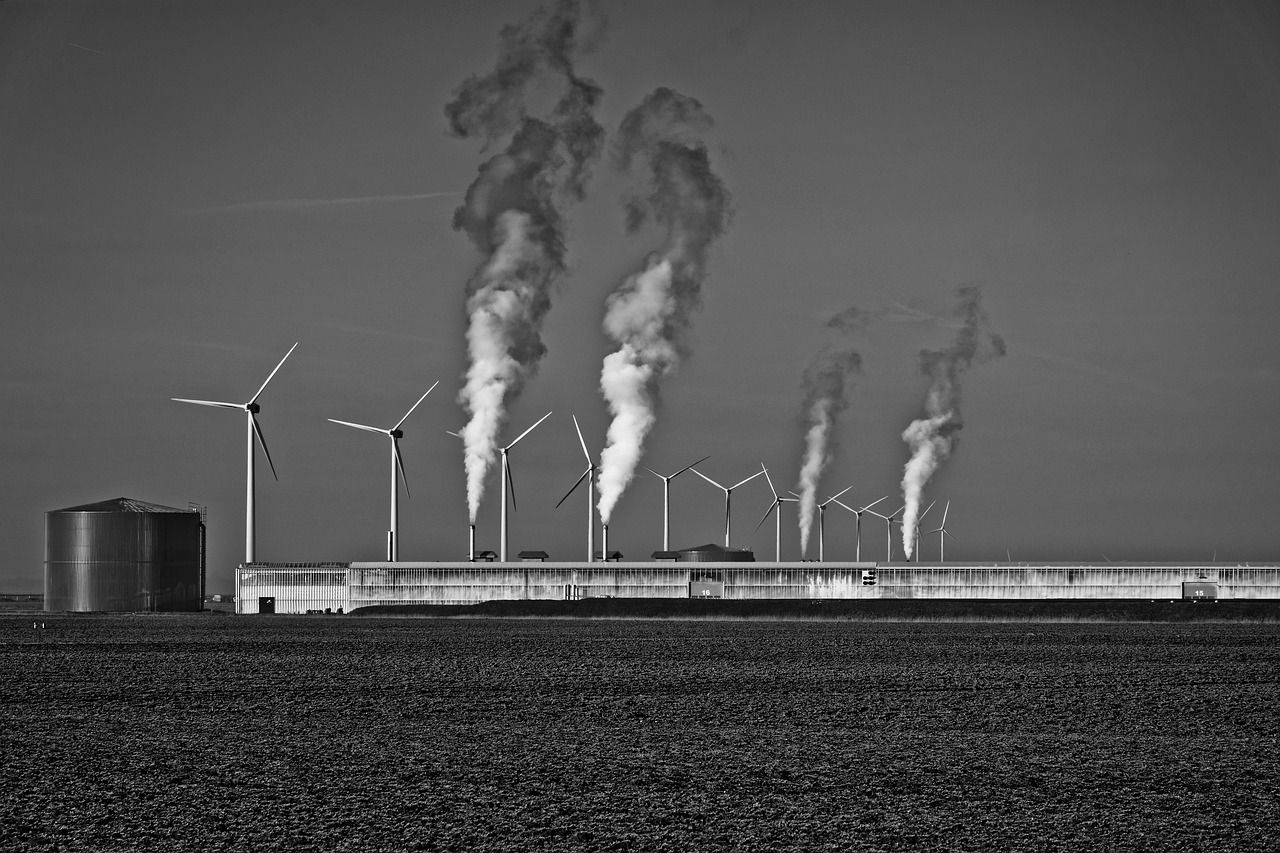
The practical questions around energy storage plants are consistent across utilities, developers, investors and communities: what technology is being used, why the project is needed, how it will earn revenue, and what risks could delay or stop it. Storage is valuable because modern grids need flexible capacity as electricity demand rises and more variable renewable power connects to the system. The actual business case depends on technology, location, market rules, interconnection timelines and community acceptance.
What counts as an energy storage plant
An energy storage plant is a power-sector facility designed to absorb energy, hold it for a period of time and return electricity to the grid or to a host facility. The term often brings battery energy storage systems to mind, but it also includes pumped-storage hydropower, thermal storage, compressed air systems, flywheels and other technologies. Rated power in megawatts is only one part of the specification. Energy capacity in megawatt-hours, and the duration over which the plant can discharge, are just as important.
| Technology | Typical role | Key limitation |
|---|---|---|
| Lithium-ion battery storage | Fast response, solar shifting, peak shaving, ancillary services and four-hour capacity in many markets | Duration, degradation, fire-safety design and supply-chain exposure must be managed |
| Pumped-storage hydropower | Large-scale bulk storage and longer-duration grid balancing | Requires suitable geography, water management, permitting and long development timelines |
| Thermal storage | Stores heat or cold for later power or industrial use, and can support buildings or concentrating solar projects | Project value depends heavily on site-specific heat demand or conversion economics |
| Compressed air and other long-duration systems | Potential multi-hour to multi-day storage where geology or infrastructure fits | Commercial scale, cost certainty and project bankability remain less mature than lithium-ion batteries |
Battery projects dominate new announcements because they can be built in modular blocks, respond within seconds and be located near substations, solar farms, industrial loads or congested grid nodes. Pumped storage remains important because it can provide large energy volumes, but new plants are more capital-intensive and limited by suitable sites. The two technologies are not direct substitutes. A battery plant may be well suited to evening peak demand, while a pumped-storage asset can be a better fit for deeper bulk shifting where local geography and permitting allow it.
Why U.S. deployment is accelerating
The U.S. storage buildout is being driven by several overlapping forces. The first is solar growth. A solar-heavy grid produces more electricity in the middle of the day and often needs capacity after sunset. Co-located solar-plus-storage plants can charge batteries when solar output is high and discharge later in the day, improving the value of the solar project and reducing curtailment risk.
The second force is market need. Storage can charge as a load and discharge as a generator, so it can respond to price spreads, reserve needs and grid stress. FERC Order No. 841, issued in 2018, required regional transmission organizations and independent system operators to remove barriers to electric storage resources participating in wholesale capacity, energy and ancillary service markets when technically capable. That regulatory change did not create every project economics case, but it helped define storage as a resource that power markets must be able to accommodate.
The third force is the project pipeline. Lawrence Berkeley National Laboratory’s Queued Up 2026 analysis, based on end-2025 interconnection data, found about 749 GW of storage capacity actively seeking U.S. grid interconnection. That figure should not be treated as a buildout forecast. Interconnection queues include speculative, delayed and withdrawn projects. Even with that limitation, the queue data shows that developers see storage as one of the main ways to connect future generation and serve load growth.
The fourth force is cost and manufacturing scale. The International Energy Agency’s 2024 battery report found that lithium-ion battery prices fell from about USD 1,400 per kilowatt-hour in 2010 to less than USD 140 per kilowatt-hour in 2023. The same report noted that lithium iron phosphate batteries had become a major share of new stationary storage because storage projects tend to value cost, cycle life and safety characteristics more than maximum energy density.
How storage plants support markets and reliability
Energy storage plants can provide several grid services from the same physical asset, although market rules determine which services can be stacked and paid. The most visible use is energy arbitrage: charging when prices are low and discharging when prices are high. In solar-heavy regions, that often means charging during midday and discharging in the evening. Arbitrage, however, is only part of the value case.
- Capacity support: Storage can contribute to peak demand needs if it can discharge during the hours when the grid is most constrained.
- Frequency regulation: Batteries can respond quickly to small changes in grid frequency, helping system operators maintain balance.
- Operating reserves: Storage can stand ready to inject power when another generator trips or demand rises unexpectedly.
- Congestion management: Strategically located storage can absorb electricity in constrained areas and reduce stress on transmission paths.
- Renewable integration: Storage can shift solar and wind output into the hours when customers need power most.
This value stack is why storage plants should be evaluated by use case, not only by installed capacity. A 100 MW battery with one hour of energy serves a different purpose from a 100 MW battery with four hours of energy. The first may be suited to fast grid services, while the second may be more useful for peak capacity and solar shifting. A large pumped-storage plant may take longer to develop, but it can provide deep energy storage that batteries may not economically cover at the same scale.
The main trade-offs developers and communities must address
The rapid growth of energy storage plants has brought legitimate questions about land use, safety, emergency response and grid interconnection. A technically strong project still needs local approval, a workable grid connection, revenue certainty and credible operations planning.
Interconnection remains a major bottleneck
Queue position is not the same as permission to build. Storage projects must study how they affect local and regional networks, whether they trigger upgrades and who pays for those upgrades. Berkeley Lab’s 2026 queue data showed a lower active queue volume than the prior year, partly because of withdrawals, but it also showed a large amount of storage still seeking grid access. For developers, the lesson is clear: the best project site is not only where land is available, but where the interconnection path, transmission capacity and market value can support financing.
Safety standards shape public acceptance
Battery safety is now a core project-development issue, not an afterthought. NFPA 855 sets installation requirements for stationary energy storage systems, while UL 9540A is used to evaluate thermal runaway fire propagation behavior in battery systems. The U.S. Environmental Protection Agency has also published safety and incident-response considerations for battery energy storage systems, including attention to emergency planning and local first responders. High-profile incidents, such as the May 15, 2024 fire at the Gateway Energy Storage facility in San Diego County, continue to influence local permitting debates even as system designs and codes evolve.
Good public communication should avoid two mistakes. One is dismissing community concerns as uninformed. The other is treating every storage facility as equally risky regardless of design. Chemistry, container spacing, ventilation, fire detection, suppression approach, emergency access, drainage, vegetation management and operating procedures all matter. A project that cannot explain these details clearly will face a harder path, especially near homes, schools, wildfire-prone areas or environmentally sensitive land. See also: Buying Guides.
Duration and degradation affect real value
Battery capacity numbers can be misleading if readers do not separate power from energy. Power capacity indicates how much electricity can be delivered at a moment. Energy capacity indicates how long the plant can sustain output. A four-hour battery can cover a short evening peak, but it cannot replace every function of a fuel-secure generator during a multi-day weather event. Batteries also degrade over time, so developers must account for augmentation, performance warranties and operating limits.
This is why long-duration storage remains a strategic topic. The IEA has described batteries as well placed for short-term flexibility across periods of one to eight hours, while other technologies may be needed for longer gaps. In practice, grids will likely use a portfolio: lithium-ion batteries for fast and daily cycling, pumped storage where geography allows, demand response, transmission expansion, flexible generation and emerging long-duration options where economics can be proven.
What to watch next in energy storage plants
The next stage of storage growth will be less about whether the technology works and more about where it creates dependable value. Three signals deserve close attention.
First, watch the difference between announced capacity and operating capacity. EIA’s August 2026 update reported that operators planned an additional 54 GW of battery storage over the next two and a half years, including planned additions in the second half of 2026, 2027 and 2028. Planned capacity can slip because of financing, supply, permitting or interconnection challenges. Tracking what actually enters service is more useful than counting announcements alone.
Second, watch hybrid projects. EIA highlighted large solar-plus-storage facilities such as the Bellefield Solar and Energy Storage Farm in California, which began operations in December 2025 with 500 MW of photovoltaic capacity and 500 MW of storage. Hybrid plants are attractive because they can share interconnection infrastructure and improve the time value of solar generation. Their revenue, however, depends on market rules, tax treatment, charging restrictions and operational strategy.
Third, watch reliability requirements for inverter-based resources. Batteries connect through power electronics, as do most solar and wind projects. As inverter-based resources become a larger share of the grid, system planners are paying closer attention to modeling, ride-through behavior, controls and coordination during disturbances. This is not a reason to slow storage deployment; it is a reason to strengthen technical standards, commissioning data and operating visibility.
For readers comparing energy storage plants, the practical checklist is straightforward: identify the technology, power rating, energy duration, interconnection status, market use case, safety standard, emergency plan, expected cycling profile and local siting impacts. A project that scores well on those factors is more credible than one that only advertises a large megawatt number.
Frequently asked questions
Are energy storage plants the same as power plants?
They are power-sector facilities, but they do not create primary energy like a gas, coal, nuclear, wind or solar plant. They store electricity or another energy form and return it later. In market operations, a storage plant may act like load when charging and like generation when discharging.
Why are so many storage plants paired with solar?
Solar output is strongest during daylight hours, while many grids experience high demand in the evening. A solar-plus-storage project can store midday generation and deliver it later, improving the value of the solar energy and helping the grid through peak hours.
What is the biggest limitation of battery energy storage plants?
The biggest limitation depends on the project, but duration, interconnection cost, degradation, safety planning and revenue uncertainty are common issues. A battery plant can be very effective for short-duration flexibility, yet it may not economically cover long periods of low renewable output without other resources.
Will storage replace all conventional power plants?
Storage will reduce the need for some peaking generation and improve the usefulness of renewable power, but it is not a one-for-one replacement for every conventional plant. Reliable grids need a mix of resources, transmission, demand flexibility, operating reserves and planning for extreme conditions.
What should communities ask before approving a storage project?
Communities should ask about battery chemistry, spacing, fire detection, emergency response, water runoff, noise, visual impact, site access, decommissioning, interconnection equipment and who is responsible for long-term maintenance. Clear answers are a sign of a stronger project.