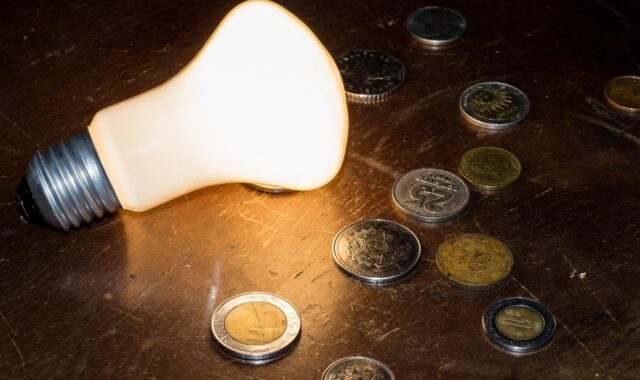
Plant energy storage explained for power plants and industrial sites
a[data-rs-seo-link]{text-decoration:underline!important;color:#1a56db!important;cursor:pointer!important;}a[data-rs-seo-link]{text-decoration:underline!important;color:#1a56db!important;cursor:pointer!important;}
What plant energy storage means in practice
Plant energy storage means using batteries, pumped hydropower, thermal storage, or another storage system to absorb electricity or usable energy at a power plant, renewable project, or large industrial facility, then release it when that energy has higher operational value. For solar and wind plants, storage can shift production from high-output hours into evening or peak-demand periods. For conventional plants and industrial sites, it can reduce demand peaks, provide backup capacity, improve power quality, and support grid services. The practical question is not whether storage is popular, but which duration, control strategy, safety design, and business model fit the plant’s operating problem.
In this article, plant can mean a generating plant connected to the grid or a large site such as a manufacturing facility, refinery, data center, water treatment plant, or campus energy system. The same basic physics apply in each case: storage absorbs energy, holds it for a period, and discharges it later. What changes is the value stack. A utility-scale solar plant may use storage to meet an interconnection requirement or a power purchase agreement profile. An industrial plant may use it to shave demand charges, ride through short outages, or support on-site solar.
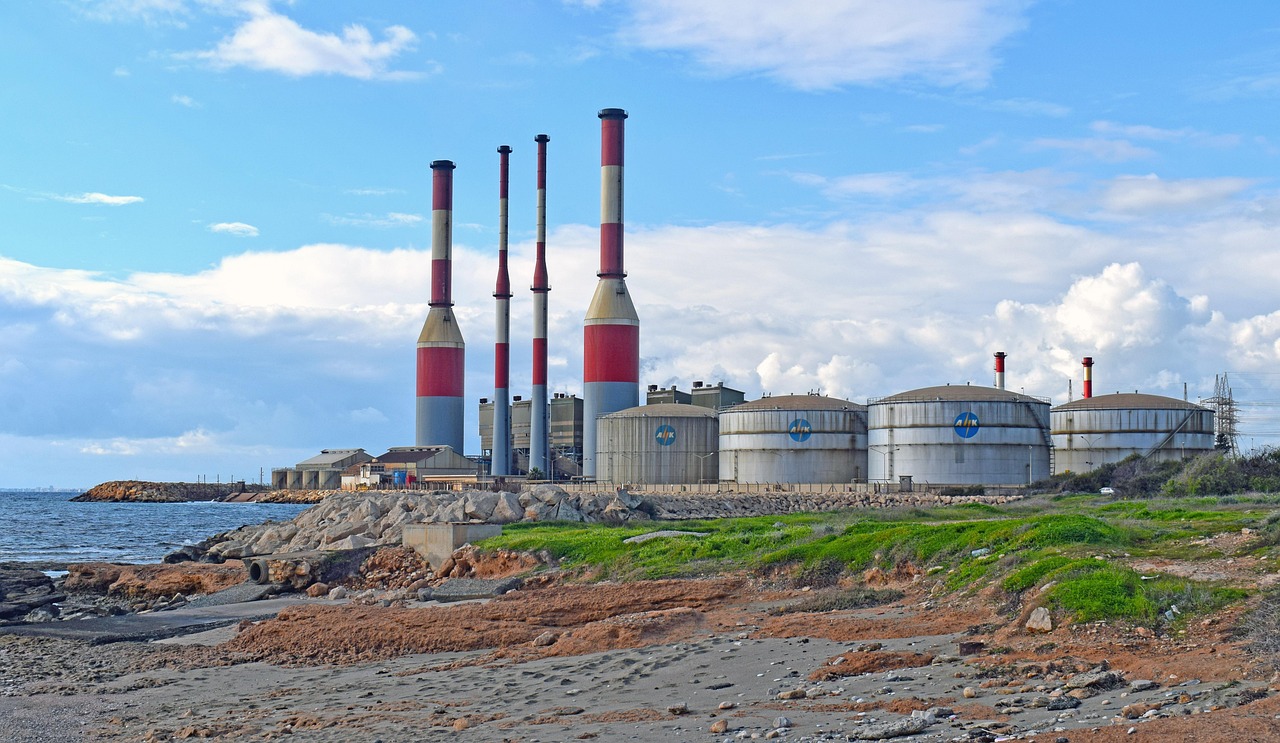
For more background on storage technologies and market developments, see the site’s Energy Storage section.
Why storage is moving from add-on to plant infrastructure
The role of storage has changed as power systems become more variable, more electrified, and more constrained by grid infrastructure. Batteries are now being built as plant-scale assets rather than small demonstration projects. The U.S. Energy Information Administration reported in August 2026 that operational U.S. utility-scale battery storage reached 43.6 gigawatts by the end of 2025, after average annual growth of about 70% over the prior three years. The International Energy Agency’s 2026 power-sector analysis described battery storage as the fastest-growing power technology and noted that roughly four-fifths of new battery capacity in 2025 was utility-scale.
That growth does not mean batteries have replaced every other form of storage. Pumped storage hydropower remains the largest source of bulk stored energy in the United States. The U.S. Department of Energy, citing the 2024 Hydropower Market Report, states that pumped storage hydropower accounts for 88% of all U.S. utility-scale energy storage, with 43 plants in operation. EIA data also show that the United States had about 23,156 MW of pumped-storage hydroelectric generation capacity across 18 states at the end of 2025.
The main point for plant planners is that different storage assets solve different problems. Lithium-ion batteries fit fast response, short-duration shifting, ramp control, and grid services. Pumped storage is better suited to large, long-lived bulk storage where geography and permitting allow. Thermal storage can be attractive where the plant’s useful energy is heat or chilled water rather than electricity alone.
| Recent indicator | What it means for plant energy storage | Source basis |
|---|---|---|
| 43.6 GW of U.S. utility-scale battery storage by the end of 2025 | Batteries have moved into mainstream grid planning and plant design. | U.S. Energy Information Administration data note, August 2026 |
| Around four-fifths of new global battery capacity in 2025 was utility-scale | The largest growth is tied to grid and plant-scale applications, not only behind-the-meter systems. | International Energy Agency 2026 power-sector reporting |
| Pumped storage hydropower accounts for 88% of U.S. utility-scale storage | Long-established storage remains important for bulk system flexibility. | U.S. Department of Energy summary of the 2024 Hydropower Market Report |
Main use cases at power plants and industrial sites
Renewable firming and energy shifting
The most visible use case is pairing storage with solar or wind. Solar generation often peaks around midday, while demand and wholesale prices may rise later in the day. A battery can charge during high-output periods and discharge when the plant’s output is more valuable. This does not create new energy. Storage systems consume more electricity than they later return because of conversion losses. The value comes from better timing, improved reliability, and reduced curtailment.
For wind projects, storage can smooth short-term output changes and help meet delivery commitments. It can also reduce curtailment when transmission capacity is limited. However, a battery cannot turn a variable renewable plant into a continuously dispatchable plant unless it is sized with enough energy capacity, charging opportunity, and reserved state of charge for that purpose.
Peak shaving and energy arbitrage
At an industrial plant, storage can charge when electricity is cheaper or when on-site generation exceeds demand, then discharge during expensive peak periods. This is commonly called peak shaving when the target is the facility’s maximum demand, and arbitrage when the target is a market price spread. EIA reporting on utility-scale batteries has shown a shift toward arbitrage as a leading use case, with operators increasingly using batteries to respond to time-varying electricity prices.
The economics depend on tariff design, market rules, cycling limits, battery degradation, and how accurately the facility can predict its load. A storage system that looks attractive under one demand-charge structure may be less valuable if rates change or if the site’s load profile becomes flatter.
Ancillary services and power quality
Batteries can respond in fractions of a second, which makes them useful for frequency regulation, reserves, ramping support, and voltage-related services when market rules allow. At plant level, similar capabilities can help protect sensitive equipment from short disturbances. The business case is strongest when the same asset can serve more than one purpose without double-counting the same stored energy. For example, a battery cannot fully discharge for peak shaving and still keep that same energy reserved for emergency backup.
Resilience and backup support
Plant energy storage can improve resilience, but it should not be treated as a drop-in replacement for all backup generation. Duration matters. A 20 MW battery with one hour of duration has 20 MWh of stored energy before operating reserves and efficiency limits. It can support critical loads for a short period, but it will not run a large site through a multi-day outage unless it is paired with generation, load reduction, or a much larger energy reservoir.
For critical facilities, storage is often used with solar, combined heat and power, diesel or gas backup, or microgrid controls. The storage system handles fast transitions and short outages, while other resources support longer events.
Technology choices and where each fits
No storage technology is right for every plant. The best fit depends on duration, response speed, site constraints, permitting, useful life, safety requirements, and whether the plant needs electricity, heat, cooling, or a combination of these services.
| Technology | Typical plant fit | Key limitation |
|---|---|---|
| Lithium-ion battery energy storage | Solar-plus-storage, wind support, peak shaving, frequency response, short-duration backup | Degradation, fire-safety design, duration cost at longer hours |
| Pumped storage hydropower | Large grid-connected storage with long asset life and bulk energy capability | Requires suitable geography, water management, long development timelines, and permitting |
| Thermal energy storage | Industrial heat, chilled-water systems, concentrating solar power, campus energy systems | Value depends on matching storage temperature and process needs |
| Flow batteries | Longer-duration stationary storage where cycle life and energy capacity are priorities | Lower market maturity than lithium-ion in many regions |
| Compressed air or hydrogen storage | Long-duration or seasonal concepts, especially where geology or industrial hydrogen demand supports the case | Efficiency, infrastructure, siting, and commercialization challenges |
Lithium-ion batteries dominate recent project announcements because they are modular, fast to deploy, and supported by a large supply chain. Even so, plant owners should not assume that a standard four-hour battery is automatically the right answer. A site with a sharp 30-minute demand peak may need high power and limited energy. A renewable plant trying to deliver evening power may need several hours. A facility planning for outage resilience may need a design based on critical load rather than nameplate plant capacity.
Sizing decisions that shape project value
Power rating and energy capacity are different
Storage is defined by both power and energy. Power, measured in MW or kW, describes how fast the system can charge or discharge. Energy, measured in MWh or kWh, describes how long it can sustain that output. A 100 MW battery with four hours of duration has about 400 MWh of nameplate energy capacity before operating limits and losses. Confusing these two numbers is one of the most common mistakes in plant energy storage planning.
Duration should follow the operating problem
Duration is not a marketing label; it is an engineering and financial decision. A plant that needs ramp control may value fast response more than long duration. A solar plant seeking evening delivery may need two to six hours, depending on market rules and contract obligations. A factory seeking backup power should calculate duration from essential loads, restart requirements, acceptable downtime, and available on-site generation. See also: Buying Guides.
Controls can be as important as hardware
The storage management system determines when to charge, when to discharge, how much energy to reserve, and which objective takes priority. A poorly controlled battery can miss market opportunities or leave too little energy for resilience. Good controls forecast plant output, load, prices, weather, and equipment constraints, then operate the asset within warranty and safety limits.
For hybrid plants, controls also affect interconnection value. If a solar-plus-storage project has a fixed grid export limit, the battery may absorb solar output that would otherwise be curtailed and release it later without exceeding the interconnection cap. That can improve utilization of the grid connection, but only if the control system is designed around the plant’s actual interconnection agreement.
Safety, permitting, and interconnection cannot be afterthoughts
Plant-scale storage introduces safety and permitting questions that need to be addressed early. For battery systems, key concerns include thermal runaway, spacing between enclosures, ventilation, fire detection, emergency access, water supply, and coordination with local fire officials. The National Fire Protection Association’s NFPA 855 standard provides installation criteria for stationary energy storage systems, including requirements that vary by technology, setting, size, separation, and fire protection approach. UL 9540 is widely used for energy storage system safety certification, while UL 9540A is a test method used to evaluate thermal runaway fire propagation behavior.
These standards do not remove risk by themselves. They provide a framework for design, testing, documentation, and response planning. Plant owners still need site-specific hazard analysis, emergency response plans, training, maintenance procedures, and clear responsibility between the owner, operator, integrator, and local authorities.
Interconnection can be just as important as safety approval. A project may have suitable equipment and still face delays if the grid connection requires network upgrades, protection studies, or operating restrictions. For industrial plants, the utility may need to review export limits, islanding protection, power quality, and whether the system can operate in parallel with the grid. Starting the interconnection process late can push a storage project beyond its intended commercial window.
What to watch in the next wave of plant energy storage
The next stage of plant energy storage will be shaped by three trends. First, grid-forming inverter capabilities are becoming more important as power systems rely on more inverter-based resources. These controls can help storage assets provide stability services that were historically supplied by rotating generators, although requirements vary by market and utility.
Second, longer-duration storage is receiving more attention. Four-hour batteries remain common, but they do not solve every reliability or renewable-shifting problem. Technologies such as flow batteries, thermal storage, compressed air, hydrogen-based systems, and new battery chemistries are being evaluated for applications where eight hours or more of discharge may be valuable. Adoption will depend on cost, bankability, supply chains, and whether market rules compensate longer-duration flexibility.
Third, storage is becoming part of broader plant design rather than a separate box added at the end. Developers are negotiating hybrid power purchase agreements, tolling structures, capacity payments, and resilience services. Industrial companies are also looking at storage alongside electrification, on-site solar, demand response, and backup generation. The strongest projects will be those that solve a defined operational problem and have a revenue model that matches how the asset is actually dispatched.
The cautious conclusion is that plant energy storage is not a universal cure for grid constraints, renewable variability, or industrial reliability. It is a flexible infrastructure tool. When the use case, sizing, controls, safety plan, and interconnection path are aligned, storage can make a plant more valuable and a power system more flexible. When those pieces are unclear, it can become an expensive asset with underused capability.
Frequently asked questions
Is plant energy storage the same as a battery energy storage system?
Not always. A battery energy storage system is one type of plant energy storage, and it is currently the most common choice for many new short-duration projects. Plant energy storage can also include pumped storage hydropower, thermal storage, flow batteries, compressed air, hydrogen, flywheels, or hybrid systems.
How long should a plant storage system last during discharge?
The required duration depends on the use case. Frequency response may need minutes, peak shaving may need one to four hours, solar shifting often needs several hours, and backup power may require a duration based on critical loads and outage planning. Nameplate duration should be checked against operating limits, efficiency losses, and reserved capacity.
Does storage generate electricity?
Storage does not generate primary energy in the way a solar panel, wind turbine, gas turbine, or hydro plant does. It stores energy produced elsewhere and returns most of it later. Because of losses, it typically consumes more electricity than it discharges, but it can make electricity more useful by changing when and how it is delivered.
What is the biggest risk in plant energy storage planning?
The biggest risk is often a mismatch between the asset and the business case. A system may be technically sound but financially weak if it is sized for the wrong duration, lacks market access, faces delayed interconnection, or cannot stack services without operational conflicts. Safety and permitting risks are also significant and should be addressed before procurement.
Can storage make a renewable plant fully dispatchable?
Storage can make renewable output more controllable, but full dispatchability requires enough stored energy, charging opportunity, inverter capacity, and operating reserve to meet the promised delivery profile. A short-duration battery can improve a renewable plant’s value without making it equivalent to a fuel-backed generator for every hour of the year.