Solar tiles vs solar panels for homeowners planning a roof upgrade

a[data-rs-seo-link]{text-decoration:underline!important;color:#1a56db!important;cursor:pointer!important;}a[data-rs-seo-link]{text-decoration:underline!important;color:#1a56db!important;cursor:pointer!important;}
Solar tiles in brief
Solar tiles are roof-integrated photovoltaic products that generate electricity while also serving as part of the roof covering. They are most relevant when a homeowner is already replacing a roof, building a new home or placing a high value on a low-profile appearance. Compared with conventional rack-mounted solar panels, solar tiles usually involve more roof-specific design work, fewer installer choices and closer review of roofing warranties, electrical warranties and local code approval.
The main question is not whether solar tiles work. They do. The decision is whether an integrated solar roof creates enough value to justify the added design, warranty and installation complexity. For many homes, standard panels remain the more flexible and cost-efficient option. For some roof replacement projects, however, solar tiles can reduce the visual impact of solar and combine two jobs that would otherwise be managed separately. For more product context, see our Solar Products section.
What solar tiles are and how they work
Solar tiles, also called solar shingles or solar roof tiles, are a form of building-integrated photovoltaics. The U.S. Department of Energy describes building-integrated photovoltaics as solar materials that replace conventional building materials in parts of a structure such as roofs, skylights or facades. In a residential roof, that means the energy-producing parts are designed to sit within the roofing system rather than above it on rails.
Most systems include active solar pieces that generate power and matching non-active pieces that complete the roof surface where solar generation is not practical. The active parts connect to wiring, power electronics and an inverter, as a conventional solar array does. The home may also use battery storage, but storage remains a separate design and cost decision.
Active tiles and non-active roof pieces
A roof usually cannot be covered only with power-producing material. Valleys, hips, ridges, shaded areas, north-facing planes and small cut sections may need non-active roofing pieces. This matters because a roof-integrated system can look continuous from the street while only part of the surface is producing electricity.
That design difference can affect system size. A simple south-facing roof plane may be easier to optimize. A complex roof with dormers, multiple slopes or heavy shade may require more non-active sections. This is one reason two homes with similar square footage can receive very different solar tile proposals.
The electrical system still needs standard solar review
Although solar tiles look like roofing, they are still photovoltaic equipment. A complete proposal should identify the inverter or microinverter approach, rapid shutdown compliance, monitoring, interconnection process, expected annual production and any battery option. A clean appearance does not remove the need for electrical permits, utility approval or inspection.
Solar tiles vs conventional solar panels
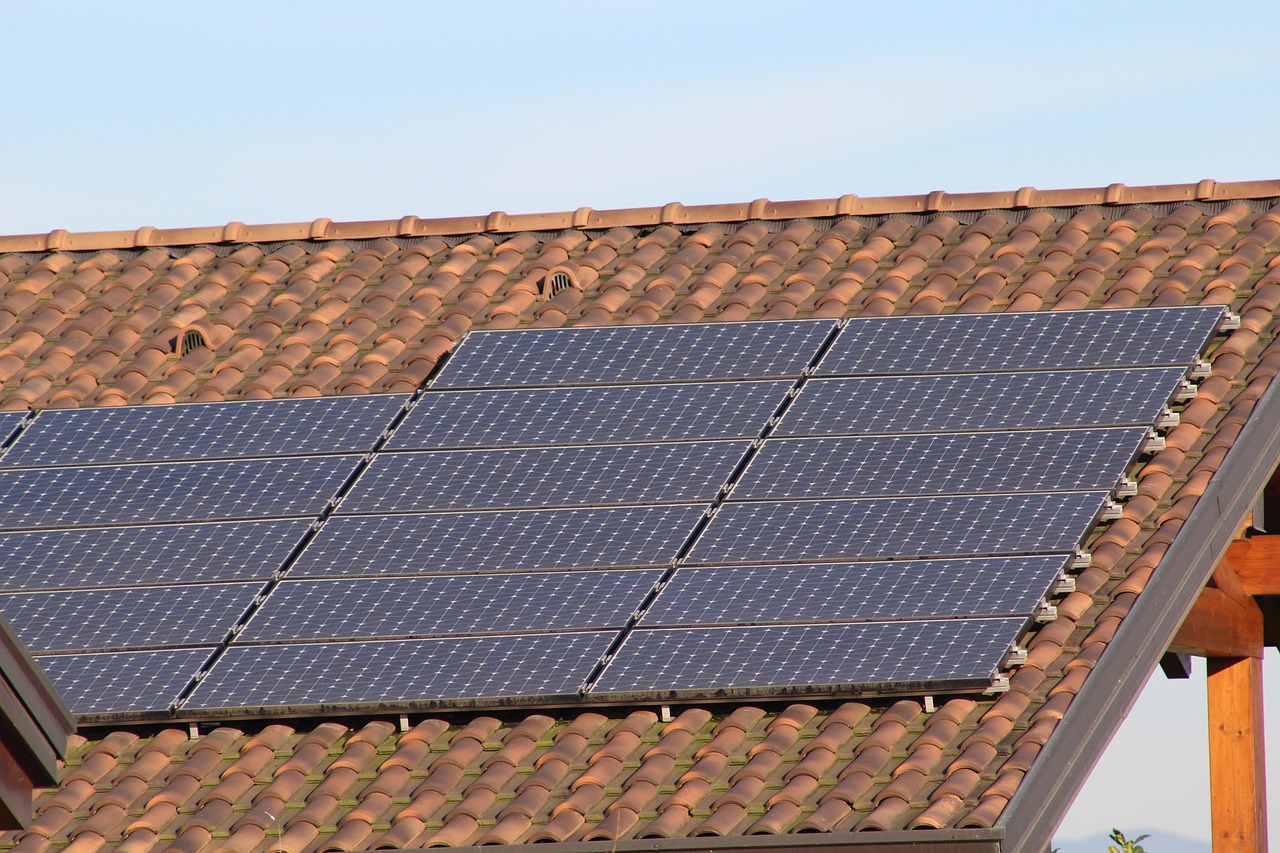
The biggest practical difference is that solar panels are added to a roof, while solar tiles become part of the roof assembly. That distinction changes the buying process. With panels, the main questions are array size, panel placement, roof condition and solar installer quality. With solar tiles, the homeowner must evaluate a roofing system and a solar power plant at the same time.
| Factor | Solar tiles | Conventional solar panels |
|---|---|---|
| Appearance | Low-profile and roof-integrated | Visible modules mounted above the roof |
| Best project timing | New roof, major roof replacement or new construction | Works well on many existing roofs in good condition |
| Design flexibility | More dependent on roof shape and active tile layout | Usually easier to size and position for production |
| Installer availability | Often limited to certified roof-solar contractors | Broader solar installer market in many regions |
| Cost structure | Blends roofing and solar costs | Usually priced mainly as a solar installation |
| Maintenance issue | Roofing and electrical warranty boundaries matter | Solar system and roof are more clearly separate |
Solar tiles may be attractive when the roof is near the end of its service life. Installing panels over a roof that will soon need replacement can create avoidable removal and reinstallation costs later. In that situation, an integrated solar roof should be compared with the combined cost of a new roof plus a conventional panel system.
If the existing roof is relatively new, conventional panels often have the advantage. They can usually be installed without replacing the entire roof covering, and the homeowner can compare more bids. Solar quotation marketplaces and industry cost comparisons commonly find that rack-mounted panels are less expensive per watt than integrated solar roof products, although local labor, roof complexity and product choice can change the result.
When solar tiles make sense
Solar tiles are not a universal upgrade. They fit a narrower set of circumstances than standard panels, but in the right project they can address roofing, energy production and appearance in one scope of work.
- The roof already needs replacement. A roof-integrated system can be evaluated against two separate projects: reroofing plus solar panels.
- Appearance is a major priority. Some homeowners, architects and homeowners associations prefer a roof that does not show raised modules from the street.
- The roof has enough usable sun exposure. South-, west- or east-facing roof planes with limited shade are generally more favorable than heavily shaded or fragmented roofs.
- The contractor can handle both roofing and solar obligations. Integrated systems require careful flashing, underlayment, wiring and inspection coordination.
- The warranty package is understandable. The buyer should know who covers leaks, power output, roof materials, electrical components and workmanship.
Solar tiles are less compelling when the roof is new, when the homeowner wants the lowest upfront solar cost, or when roof geometry limits active tile placement. A standard panel array may also be easier to expand later because panels are modular and are not tied as tightly to the roof covering pattern.
Cost and incentive issues in 2026
The cost conversation changed for U.S. homeowners after the federal residential clean energy credit deadline. Current IRS guidance says the Residential Clean Energy Credit was equal to 30 percent of eligible new clean energy property costs for systems installed from 2022 through December 31, 2025, and that the credit is not available for property placed in service after December 31, 2025. The IRS also distinguishes between solar roofing tiles or shingles that generate electricity and ordinary roofing materials that simply support solar equipment.
That distinction mattered while the credit was available because electricity-producing solar roofing components could qualify, while traditional roof trusses and standard shingles generally did not. In 2026, homeowners should not assume the former federal homeowner credit applies to a new solar tile purchase. State incentives, local rebates, utility programs and financing terms may still affect the economics, but those programs vary by location and change frequently.
| Period | Federal homeowner solar credit context | Planning implication |
|---|---|---|
| 2022 through December 31, 2025 | IRS guidance listed a 30 percent Residential Clean Energy Credit for qualifying property installed in this period | Solar roofing tiles that generated electricity could be relevant to credit calculations |
| After December 31, 2025 | IRS guidance states the credit is not available for property placed in service after this date | 2026 quotes should be evaluated without assuming the former federal homeowner credit |
Because tax rules can depend on ownership, installation timing and specific project facts, homeowners should ask a qualified tax professional before relying on any incentive estimate. A sales proposal should separate tax assumptions from the actual contract price so the project can be judged clearly.
How to compare quotes fairly
A useful comparison should not simply place one solar tile quote beside one panel quote. It should compare complete scenarios. For example, a homeowner with an aging asphalt roof might ask for three numbers: a roof replacement alone, a roof replacement plus conventional solar panels, and an integrated solar tile roof sized to similar annual energy production. See also: Buying Guides.
Each quote should show system capacity, estimated annual kilowatt-hour production, roof scope, battery scope if any, inverter equipment, warranty terms, permitting responsibilities and expected utility interconnection steps. Without those details, the lowest or highest price may not tell the full story.
Codes, warranties and product details to check
Solar tiles sit at the intersection of roofing codes, electrical codes and product warranties. The exact requirements depend on the product and the local authority having jurisdiction, but buyers should look for evidence that the system has been tested and listed for its intended use.
For example, GAF Energy lists Timberline Solar ES 2 specifications including a 57-watt energy shingle, a minimum roof pitch of 2:12 or greater, BIPV system certification under UL 7103, Class A fire listing under ANSI/UL 790 and wind testing under ASTM D3161 Class F. Its warranty materials describe power output coverage that starts at no less than 98 percent of original rated output in the first year and declines by no more than 0.55 percent annually after that, reaching a year-25 warranted level of 84.8 percent.
Tesla Solar Roof warranty documents effective March 4, 2026 describe 25-year product and weatherization warranties and a module warranty that covers output at standard test conditions. The Tesla warranty states output capacity is at least 95 percent of rated peak power at five years, followed by no more than 0.5 percent annual decline for the next 20 years.
Those examples show why warranty reading matters. A headline warranty length is not enough. Homeowners should review exclusions, labor coverage, transferability, workmanship coverage, inverter coverage, leak coverage and what happens if a failed component is no longer available in the same form.
A practical buying checklist
Before choosing solar tiles, use a checklist that treats the project as both a roof and an energy system.
- Confirm roof age, decking condition, slope, shading and structural issues before accepting production estimates.
- Ask which sections are active solar tiles and which are non-active matching roof pieces.
- Compare annual energy production, not just system size or roof area.
- Request separate line items for roofing, solar equipment, electrical work, batteries and monitoring where possible.
- Verify who holds the roofing license, electrical license and product certification for the installation.
- Read product, performance, weatherization, workmanship and inverter warranties as separate documents.
- Confirm local permitting, inspection and utility interconnection responsibilities in writing.
- Evaluate the project without assuming expired federal homeowner incentives apply in 2026.
The strongest case for solar tiles appears when a roof replacement is already planned, the roof has favorable sun exposure and the homeowner values design integration enough to accept a potentially higher cost and a narrower installer market. If the main goal is maximum energy production per dollar, conventional panels should remain in the comparison.
Frequently asked questions
Are solar tiles the same as solar shingles?
The terms are often used together, but they can describe slightly different product formats. Solar shingles usually resemble asphalt shingles, while solar tiles may refer more broadly to roof-integrated solar pieces, including glass tile-style systems. Both fall under the broader idea of building-integrated photovoltaics when they replace or function as part of the roof covering.
Do solar tiles replace the whole roof?
Not always. Some systems use active solar sections combined with matching non-active roofing materials. The final design depends on roof shape, shade, required system size and the manufacturer’s installation rules. A proposal should clearly show which roof planes produce electricity.
Are solar tiles eligible for the federal tax credit in 2026?
For homeowner-owned residential projects, current IRS guidance says the Residential Clean Energy Credit is not available for property placed in service after December 31, 2025. Incentive treatment can be fact-specific, so homeowners should check current IRS guidance, state programs and professional tax advice before making a purchase decision.
Do solar tiles produce as much power as panels?
They can produce meaningful electricity, but production depends on usable roof area, orientation, shading, active tile layout and product rating. Conventional panels are often easier to position for maximum output because they are mounted above the roof and are available from many manufacturers in standardized sizes.
Who should consider solar tiles first?
Homeowners planning a roof replacement or new construction should consider them first, especially if appearance is a major concern. Homeowners with newer roofs, tight budgets or a primary goal of lowest cost per watt should compare conventional solar panels carefully before committing to an integrated roof system.