How to choose an EV charger as U.S. charging standards change
a[data-rs-seo-link]{text-decoration:underline!important;color:#1a56db!important;cursor:pointer!important;}a[data-rs-seo-link]{text-decoration:underline!important;color:#1a56db!important;cursor:pointer!important;}
The EV charger decision now
Choosing an EV charger is no longer just about the fastest published charging rate. The equipment has to match the vehicle inlet, the electrical service, the parking location, the driver’s dwell time and the connector transition now under way in North America. In most single-family homes, a properly installed Level 2 charger remains the practical default because it can restore a normal day’s driving overnight. In workplaces, multifamily buildings and retail sites, buyers also need to plan for access control, billing or payment, load management and maintenance. For highway corridors and fleet depots, DC fast charging can be essential, but it raises the bar for utility service, site design, operating cost and uptime.
This article explains how to evaluate charging equipment in the United States without treating one connector or power rating as a universal answer. For more background on related products and infrastructure topics, see our charging equipment section.
Match the charging level to the real use case
The U.S. Department of Energy commonly separates EV charging into Level 1, Level 2 and DC fast charging. The label matters less than the trip pattern, dwell time and site conditions each level can realistically support.
Level 1 is slow but useful for light daily driving
Level 1 charging uses a standard 120-volt outlet and is usually delivered through a portable cord set. DOE consumer guidance describes Level 1 charging as a low-power option that can work for drivers with short daily trips, plug-in hybrids, secondary vehicles or emergency top-ups. A common estimate is roughly 2 to 5 miles of range per hour, depending on the vehicle and conditions.
The limitation is time. A battery-electric vehicle that needs 40 or 60 miles of recovery every day may outgrow Level 1 quickly, especially in cold weather or where the outlet also serves other loads. Level 1 is best treated as a convenience or backup option, not as a substitute for a dedicated charging plan when daily mileage is high.
Level 2 is the practical default for homes and many destinations
Level 2 charging uses 208 to 240 volts and is common at homes, workplaces, apartments, hotels and long-dwell retail locations. DOE and ENERGY STAR materials commonly describe Level 2 as adding about 10 to 30 miles of range per hour, with many typical installations landing near the middle of that range. DOE’s Federal Energy Management Program has also used a 6.7 kW Level 2 example that adds about 25 miles of range per hour for a typical EV sedan.
That makes Level 2 well suited to overnight charging and to sites where vehicles sit for several hours. It is also easier to deploy than DC fast charging because the equipment is less expensive, the electrical demand is lower and the vehicle’s onboard charger handles the AC-to-DC conversion.
DC fast charging is for short dwell times and high turnover
DC fast charging converts AC power to DC inside the charging equipment and sends DC power directly to the vehicle battery system. It is the right tool for highway corridors, high-utilization public sites, some fleet depots and locations where drivers expect to leave within minutes rather than hours.
However, DC fast charging is not simply a faster Level 2 charger. It may require significant utility coordination, transformer upgrades, site permitting, thermal management, network support and maintenance planning. Federal minimum standards for covered corridor projects under 23 CFR Part 680 set a useful reference point: they have required DC fast charging sites to support at least four simultaneous charging ports, with each DC port capable of delivering at least 150 kW, and have emphasized reliability through an annual uptime requirement above 97% for each port.
| Charging type | Typical power environment | Common use | Main planning issue |
|---|---|---|---|
| Level 1 | 120 V AC outlet | Short commutes, plug-in hybrids, backup charging | Very slow recovery |
| Level 2 | 208 to 240 V AC circuit | Homes, workplaces, apartments, hotels | Panel capacity and installation quality |
| DC fast charging | High-power DC equipment | Highway stops, fleets, high-turnover public sites | Utility service, cost, uptime and maintenance |
Understand connector choices before buying equipment
Connector compatibility is the part of the EV charger decision that has changed the most. A charger can have the right power rating and still be difficult to use if the connector strategy does not match the vehicles expected at the site.
J1772 and CCS still matter because many vehicles already use them
For years, the J1772 connector has been the common North American AC connector for Level 1 and Level 2 charging on non-Tesla vehicles. CCS Type 1 combines the J1772-style AC connector with two additional DC pins for fast charging. This installed base remains important because many vehicles on U.S. roads still use J1772 for AC charging and CCS for DC fast charging.
A site serving mixed vehicles should not assume that a newer connector automatically eliminates the need for legacy compatibility. Adapters can help in some situations, but they introduce questions around user education, theft, electrical ratings and responsibility. For public or shared equipment, native connector availability is still easier for drivers than expecting everyone to carry the right adapter.
NACS has become SAE J3400, but the transition is uneven
The Tesla-developed North American Charging Standard has moved into the open standards process as SAE J3400. SAE issued J3400 in December 2023 and revised the recommended practice in September 2024. The Joint Office of Energy and Transportation has described J3400 as part of a broader effort to support an interoperable charging network as more automakers adopt the connector in North America.
For buyers, the key issue is timing. Newer vehicles may arrive with J3400/NACS ports, while many vehicles already in service still use J1772 and CCS. A home buyer should start with the connector on the vehicle in the driveway, then consider future vehicles. A commercial site should look at its expected customer mix over several years, not only the latest vehicle announcements.
CHAdeMO is now a legacy consideration
CHAdeMO remains relevant for some older EVs, especially certain Nissan Leaf models, but it is no longer the central connector for new U.S. charging plans. A public site may still choose to support it if local demand justifies the cost. For many new installations, the larger strategic question is how to balance CCS and J3400/NACS availability.
Size the charger around driving, dwell time and panel capacity
A common mistake is to buy the highest-output EV charger available and then discover that the electrical panel, circuit, permit requirements or vehicle onboard charger cannot use that output. Charger sizing should start with three questions: how many miles need to be recovered, how long the vehicle sits, and what electrical capacity is available.
For a single-family home, a 32-amp Level 2 charger on a suitable circuit may be enough for many drivers. A 40-amp or 48-amp unit may make sense for larger batteries, two-driver households or short overnight windows. Very high AC output is not always useful because the vehicle’s onboard charger sets a ceiling. If the car can only accept 11.5 kW AC, installing a higher-output AC EVSE will not make that car charge faster. See also: Buying Guides.
| Example Level 2 output | Typical use case | Planning note |
|---|---|---|
| 16 A | Low-mileage driver or constrained electrical service | May be adequate if overnight dwell time is long |
| 32 A | Common home charging scenario | Often balances speed and installation practicality |
| 40 A | Higher daily mileage or larger battery | Often used with a 50 A circuit when code allows |
| 48 A | Faster home or shared private charging | Typically hardwired and requires appropriate circuit capacity |
Electrical work should be evaluated by a qualified electrician under the current National Electrical Code and local rules. EV charging is a continuous load, so circuit sizing, conductor selection, overcurrent protection, grounding, outdoor rating and permitting all matter. In older homes, the service panel may be the real limiting factor, not the charger price.
Prioritize safety certification and useful smart features
A listed charger is more than a marketing preference. For AC charging equipment in North America, buyers should look for certification by a nationally recognized testing laboratory, such as UL or ETL, and confirm that the product is intended for EV charging rather than being a generic high-power device. UL 2594 is a key safety standard for AC electric vehicle supply equipment, while DC fast charging equipment follows different safety and system requirements.
ENERGY STAR guidance adds another practical point: Level 1 and Level 2 EV chargers spend much of their time in standby mode, and ENERGY STAR certified units are designed to reduce standby energy use. ENERGY STAR has also highlighted connected features such as energy reporting and demand response capability, when supported by the charger, network and utility.
Smart features are useful when they solve a defined operating problem. A homeowner may value scheduled charging to use off-peak electricity rates. A multifamily property may need user authentication, billing, session limits and load sharing. A fleet may need dashboards, charger status alerts and reports by vehicle or driver. A simple home charger without networking may still be the right choice if the vehicle and utility app already handle scheduling.
Public and workplace charging need a reliability plan
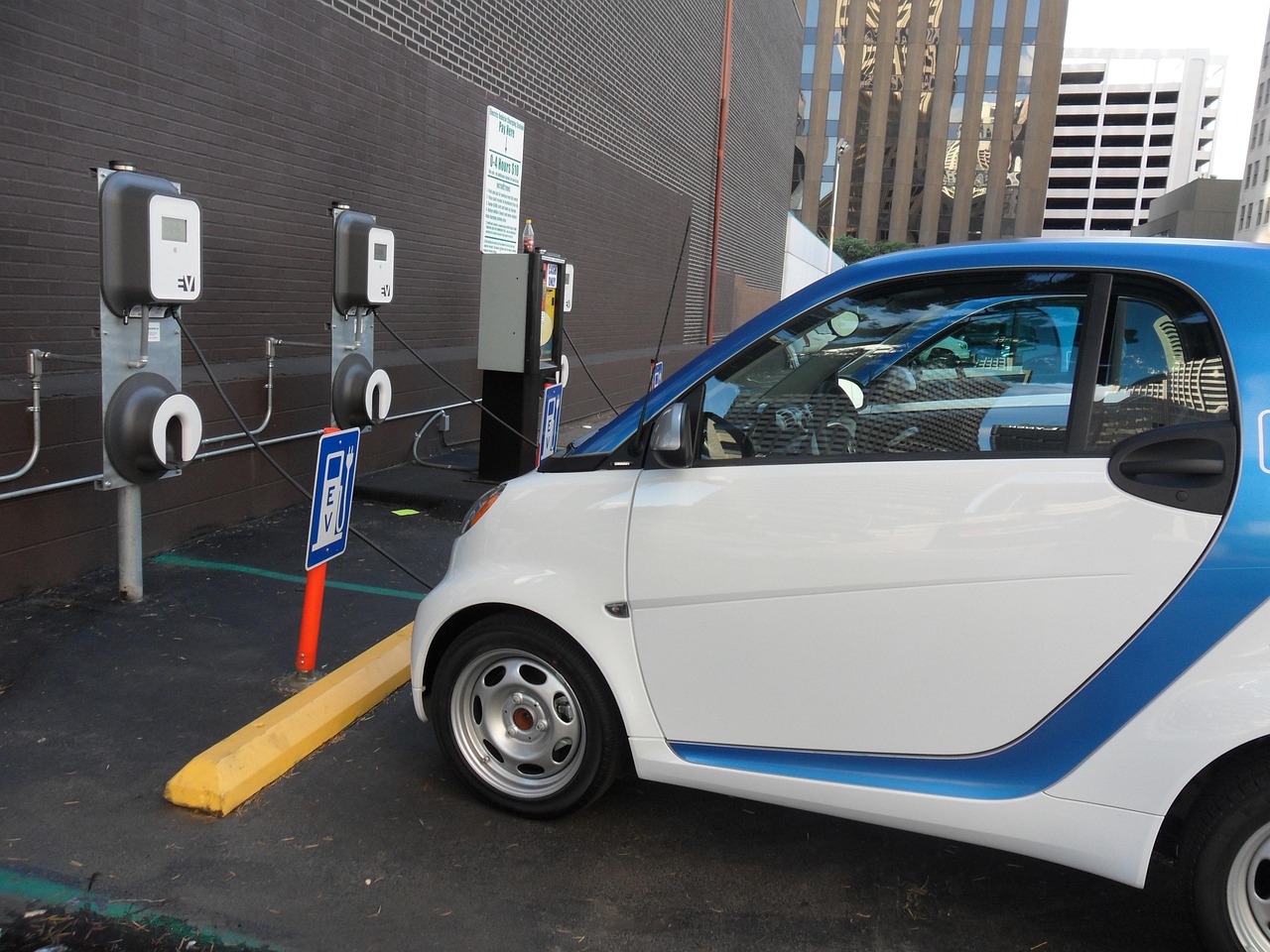
Public charging is judged by a different standard than home charging. A home EV charger can be reset by the owner. A public charger that fails during a road trip damages driver confidence, site reputation and utilization. Reliability is now a central procurement issue for charging equipment, not an afterthought.
For workplace, retail, hotel and municipal sites, the equipment specification should include service response expectations, spare parts availability, cable durability, connector holsters, payment options, network support and clear signage. For paid public charging, operators should also think about credit card access, app-based access, pricing transparency and how drivers will know whether a port is available before they arrive.
Federal corridor standards have pushed the industry toward measurable uptime, but a buyer should ask how uptime is calculated. A port that is online but cannot start sessions reliably is not useful to drivers. Site owners should request maintenance history, warranty terms, network support commitments and a clear escalation process before choosing equipment for public use.
A practical checklist before selecting an EV charger
Before buying charging equipment, work through the following checklist. It reduces the risk of paying for speed, software or connector hardware that the location does not actually need.
- Confirm the vehicle inlet. Identify whether the vehicle uses J1772, CCS, J3400/NACS or a legacy connector.
- Calculate daily recovery needs. Estimate miles driven per day, not just full battery size.
- Measure dwell time. Overnight, workday and 20-minute stop use cases point to different equipment.
- Check onboard AC charging limits. The vehicle may not accept the full output of a high-power Level 2 charger.
- Have the electrical service evaluated. Panel capacity, circuit length and local code can change the real cost.
- Choose indoor or outdoor ratings carefully. Cable length, weather exposure and mounting location affect daily usability.
- Decide whether networking is necessary. Do not pay for software unless billing, access control, reporting or load management are needed.
- Plan for the connector transition. Shared sites may need dual-connector equipment or a staged upgrade path.
- Ask about support. Warranty length, replacement parts and response time matter more as utilization rises.
Frequently asked questions
Is Level 2 charging enough for most homes?
Yes. Level 2 charging is usually enough for a home because the vehicle often sits for many hours overnight. The right output depends on daily mileage, battery size, electrical service and the vehicle’s onboard AC charging limit.
Should I buy a J1772 or NACS charger?
Start with the vehicle you own or have ordered. If it has a J1772 inlet, a J1772 Level 2 charger is straightforward. If it has a J3400/NACS inlet, a native NACS charger may be more convenient. For shared sites, dual-connector planning may be safer during the transition.
Does a higher-kW EV charger always charge faster?
No. Charging speed is limited by the charger, the vehicle, the battery temperature, the state of charge and, for AC charging, the vehicle’s onboard charger. Buying more power than the vehicle can accept may add cost without reducing charge time.
Is DC fast charging better than home charging?
DC fast charging is better for road trips and short stops, but home Level 2 charging is usually more convenient for daily use. DC fast charging also requires more expensive equipment and more complex site planning.
What matters most for a public EV charger?
Reliability, connector availability, clear pricing, accessible parking layout, payment options and fast service response are all critical. Power rating matters, but a lower-power charger that works consistently can deliver a better driver experience than a high-power port that is often offline.